Land mulching in Durham, NC turns overgrown brush, privet thickets, and volunteer trees into usable ground without burn piles or hauling fees. Property owners from South Durham infill lots to pastures along the Eno River are asking the same three questions: what does this actually cost, which permits apply, and does a half-acre lot really qualify for an exemption. This guide breaks down pricing, methods, and the county rules that catch most owners off guard before you request a quote.
What Land Mulching Involves in Durham, NC
New subdivisions, infill construction, and commercial growth tied to the RTP corridor have pushed more landowners to deal with vegetation they'd ignored for years. It's not only new development, either.
Established neighborhoods like Hope Valley, Woodcroft, and Forest Hills often have mature lots where brush and volunteer trees have crept past old property lines. Out toward rural North Durham and the Eno River corridor, the pattern looks different but leads to the same place: pastures and tree lines that haven't been maintained in a decade or more.
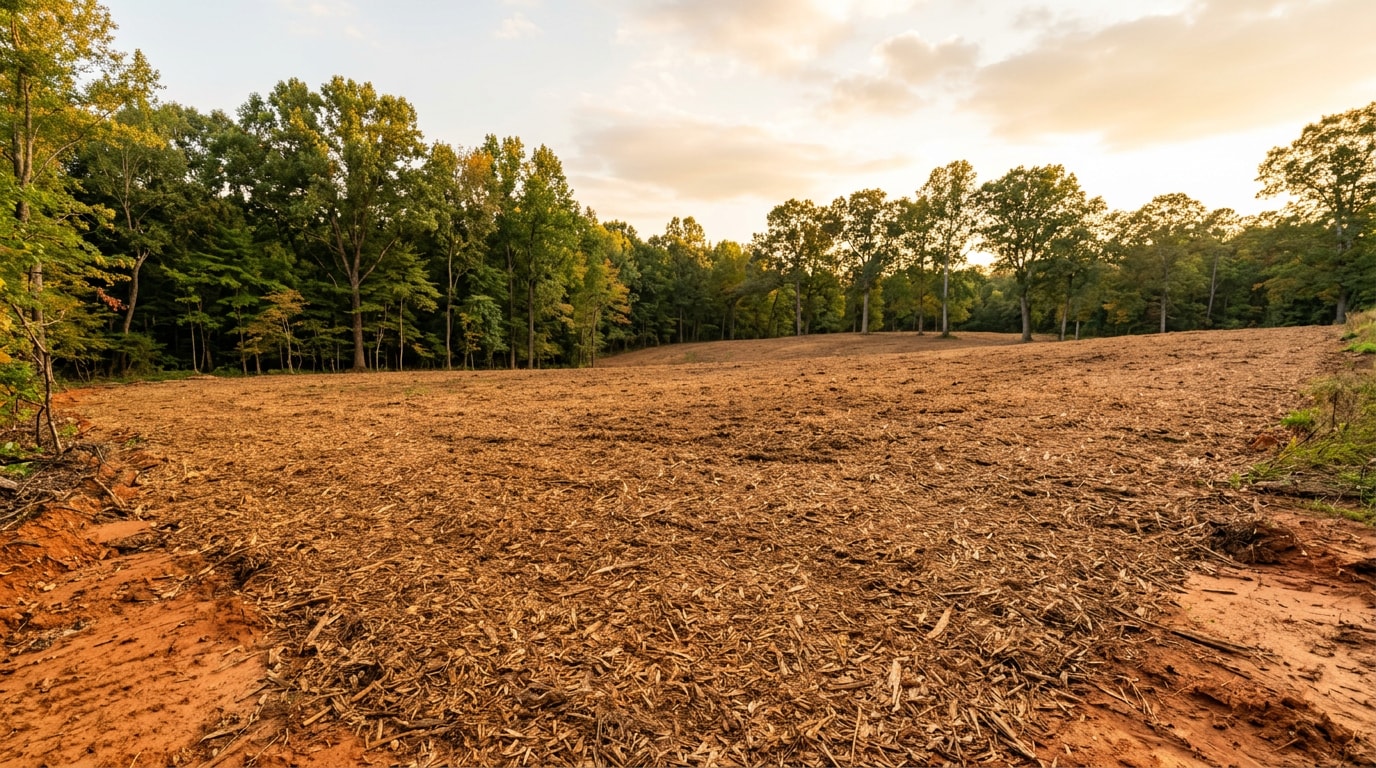
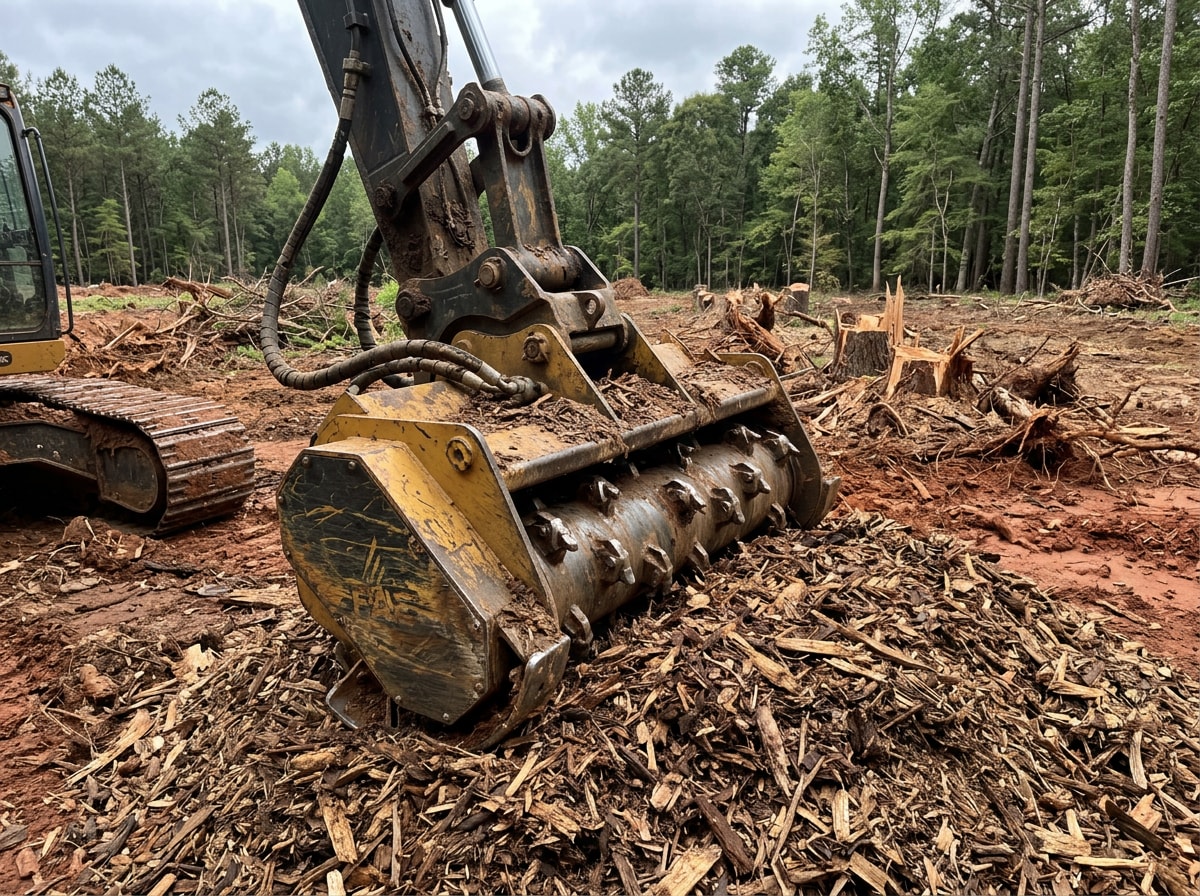
Land mulching uses a single machine, usually a skid steer or tracked carrier fitted with a mulching head, to grind standing brush and small trees into a mulch layer that stays on-site. That single-pass approach is why it has become the default method for reclaiming overgrown Durham lots rather than cutting, piling, and hauling everything away.
Forestry Mulching vs. Traditional Land Clearing in Durham, NC
Two main methods handle overgrown brush on Durham properties, and knowing the difference matters before you ask for pricing.
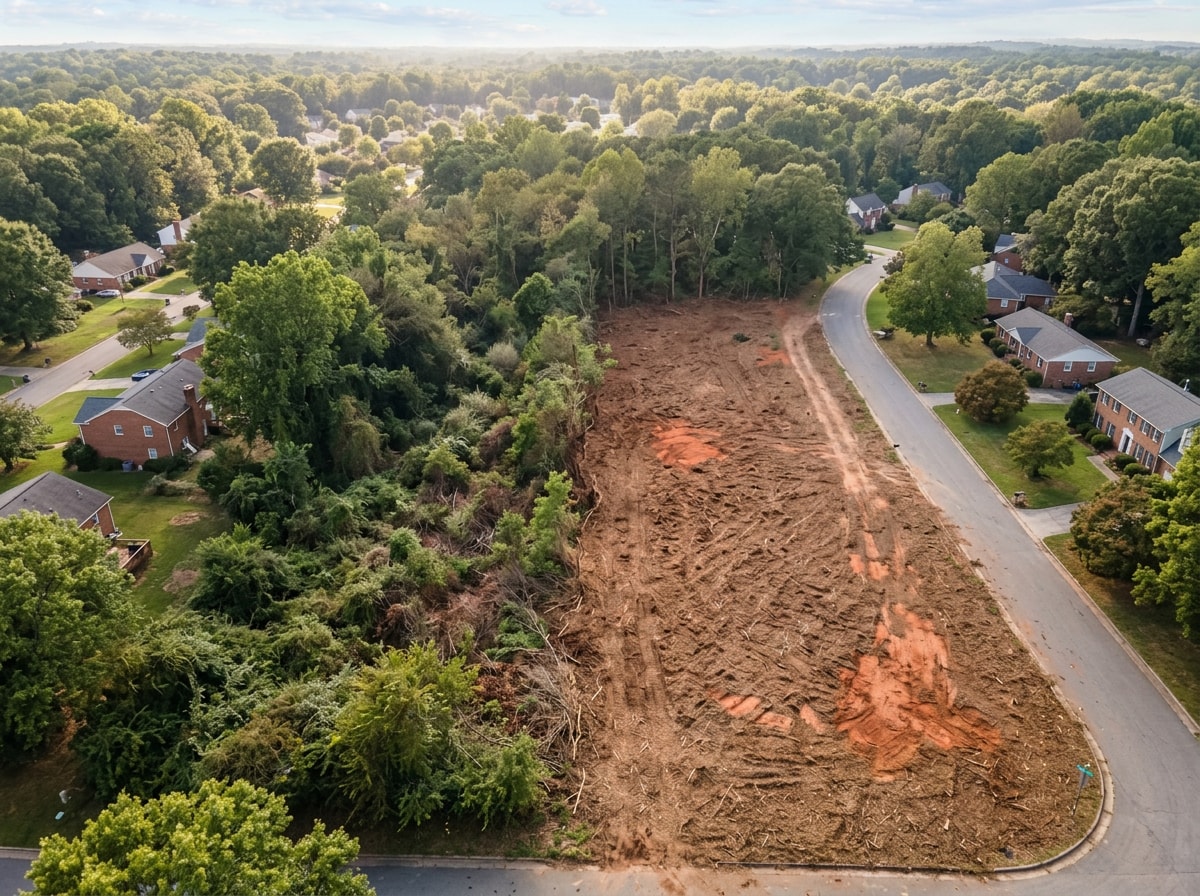
- Forestry mulching: One machine grinds brush and small trees into mulch that stays on-site. No burn piles, no hauling, faster turnaround.
- Traditional land clearing: Multiple machines cut, pull, and haul debris away, leaving bare, gradeable soil behind.
Property owners choose mulching for hunting land management, cutting new trails, expanding usable yard space, or right-of-way clearing along fence lines and driveways. Traditional clearing makes more sense when the end goal is construction-ready dirt, since mulching alone won't remove stumps or grade a site. Smaller infill lots usually favor mulching; larger acreage headed for building typically needs full clearing and site preparation afterward. A reputable landscape contractor can walk a property and recommend which approach fits the end use.
How Much Does Land Mulching Cost in Durham, NC?
Land mulching in Durham typically runs $1,500 to $6,000 per acre in 2026, though the spread is wide because so many variables affect price. Smaller, targeted jobs, like clearing a single fence line or a quarter-acre of brush, often fall under $1,500 total rather than per acre.
Price depends heavily on what's actually growing on the property and how hard it is to reach.
| Property Type | Typical Cost Range (per acre) | Why |
|---|---|---|
| Open field or pasture | $1,500–$2,800 | Light brush, easy machine access |
| Wooded rural lot | $2,500–$4,500 | Dense canopy, larger trunk diameters |
| Urban infill lot | $4,000–$6,500+ | Tight access, tree protection rules, disposal limits |
| Lake-adjacent/buffer-restricted | $3,500–$6,000+ | Hand-clearing near buffers, extra permitting time |
Urban infill lots inside Durham city limits often cost more per acre than open rural land, which surprises a lot of first-time buyers. Tight lot access limits equipment size, tree protection ordinances restrict what can come down, and urban debris disposal rules add time crews have to bill for. A one-acre wooded lot outside the city with open road access can often be mulched faster and cheaper than a half-acre infill lot hemmed in by neighbors and sidewalks.
Vegetation and Terrain Challenges in Durham, NC
Durham's vegetation problem is unusually aggressive compared to a lot of the Southeast, largely because fast-spreading invasives layer on top of a dense hardwood canopy. Common examples from southeast forests include kudzu, cogongrass, and Japanese honeysuckle, and invasive plants are present on roughly 1 out of every 10 southern forest acres. That combination makes manual clearing slow and often ineffective, which is part of why forestry mulching has become the go-to method locally.
Kudzu and Japanese honeysuckle are the two invasives homeowners mention most, followed closely by privet hedges that form dense thickets along fence lines and woodland edges. After storms, volunteer sweetgum saplings tend to fill in gaps almost overnight. Add Durham's heavy red clay soil, which compacts and erodes differently than sandy coastal soil, and you get terrain that's genuinely harder to clear than it looks from the road. For more detail on identifying and managing invasive vegetation before equipment shows up, NC State Extension's forest invasive-plant guide is a solid starting point.
Benefits of Forestry Mulching Beyond Cleanup
The mulch layer left behind after clearing does real work for the property, not just cosmetic cleanup.
- Erosion control: Spread mulch slows runoff and holds soil in place on sloped or disturbed ground.
- Weed suppression: The layer blocks sunlight, buying time before new vegetation takes hold.
- Soil health: Over months, the organic layer breaks down and feeds the topsoil.
- Workability: Reclaimed ground stays more usable for pasture, trails, or future building than a site stripped bare.
For owners trying to reclaim overgrown land, mulching tends to leave the ground less prone to erosion than a clear-cut approach, since there's no bare soil exposed to the next heavy rain.
Permits and Regulations for Land Clearing in Durham
Durham's permit rules catch a lot of property owners off guard, since the common assumption is that anything under one acre is exempt. That's not quite right. A land-disturbing permit is required on any privately funded, non-agricultural project with a disturbed area greater than 12,000 square feet, and a sedimentation and erosion control plan kicks in once the disturbed area exceeds 20,000 square feet, except in certain water quality areas, where the plan requirement starts at 12,000 square feet. That's a little over a quarter-acre, not a full acre, so a wooded half-acre infill lot can trip the threshold well before the owner expects it.
On a recent Durham-area job, the homeowner assumed a half-acre lot was automatically exempt because it was "under an acre." It wasn't, once the disturbed footprint was measured against the county's 12,000-square-foot threshold. Confirming that number before scheduling equipment saved a stop-work delay mid-project.
Inside city limits, the Unified Development Ordinance adds another layer. UDO Section 8.3, Tree Protection and Tree Coverage, sets standards that can limit how much canopy you're allowed to remove , particularly on larger or more visible lots. If your property sits inside a managed community like Hope Valley, Woodcroft, or Treyburn, check the HOA's architectural review rules too; many require approval before significant clearing, separate from any county or city permit. The Durham County Stormwater and Erosion Control Division handles permit questions directly, and a landscape contractor working in the area can usually confirm which of these rules apply to a specific address.
Falls Lake Watershed Rules and Stream Buffers in Durham County
Land that drains toward Falls Lake, a protected drinking-water reservoir serving the Triangle, falls under extra environmental restrictions that don't apply elsewhere in the county. Durham County enforces the Neuse River, Falls Lake, and Jordan Lake nutrient management rules through development reviews covering flood control, water quantity, and water quality.
The state's riparian buffer rules protect vegetated areas adjacent to intermittent and perennial streams, lakes, reservoirs, ponds, estuaries, and modified natural streams.
If a property backs up to a stream or sits anywhere near the watershed boundary, it's worth checking with the county before scheduling equipment. Stream buffer clearing often requires hand-clearing within a set distance, even when the rest of the property allows machine work. The NC Division of Water Resources' Riparian Buffer Protection Program page explains the buffer requirements in more detail.
Getting a Free Land Mulching Quote in Durham County
Most established providers can give a rough estimate within a day or two of a site visit, with actual scheduling windows running anywhere from one to several weeks depending on season. Reputable crews typically cover Durham along with Chapel Hill and surrounding communities, which means regional scheduling flexibility if your preferred week is already booked. If you're also budgeting for what comes after clearing, our mulching cost guide for Garner, NC breaks down bed and bulk mulch pricing once the land itself is reclaimed.
Requesting a quote is the simplest way to lock in a realistic timeline before you schedule crews for the job. Get a free estimate and get a site visit on the calendar, or visit our homepage to see the full range of landscape, hardscape, and outdoor living services we handle once your Durham, NC property is cleared.
FAQ
What is the difference between forestry mulching and land clearing?
Mulching grinds vegetation and leaves it on-site as a protective layer. Traditional clearing removes and hauls debris away, leaving bare soil ready for grading or construction. Mulching is faster and skips disposal fees; clearing is necessary when you need construction-ready dirt.
Is forestry mulching cheaper than traditional land clearing?
Generally, yes. Mulching skips hauling, burning, and disposal fees, so it's typically the cheaper method for properties that don't need bare, construction-ready ground.
Do I need a permit to clear land in Durham, NC?
Often, yes, and at a smaller size than most owners expect. A disturbed area over 12,000 square feet, about a quarter-acre, generally requires a land-disturbing permit in Durham, with a full erosion control plan required past 20,000 square feet. Confirm the exact threshold with Durham County before equipment arrives.
Can you clear property in the Falls Lake watershed?
Yes, with conditions. Clearing is allowed but limited near streams and the shoreline under state riparian buffer rules, so check with Durham County before equipment arrives near water.
How long does land mulching take in Durham County?
Most residential jobs take one to three days. A single overgrown fence line or small lot can be done in a day; larger wooded or buffer-restricted parcels take longer. Scheduling typically runs one to a few weeks out depending on season.
What is the best way to clear a wooded lot in Durham?
Forestry mulching is usually the best fit for wooded residential lots because it clears trees and brush in a single pass with no burn piles or hauling. If the lot needs to go to bare, gradeable dirt for construction, traditional clearing and grading is the right call instead.