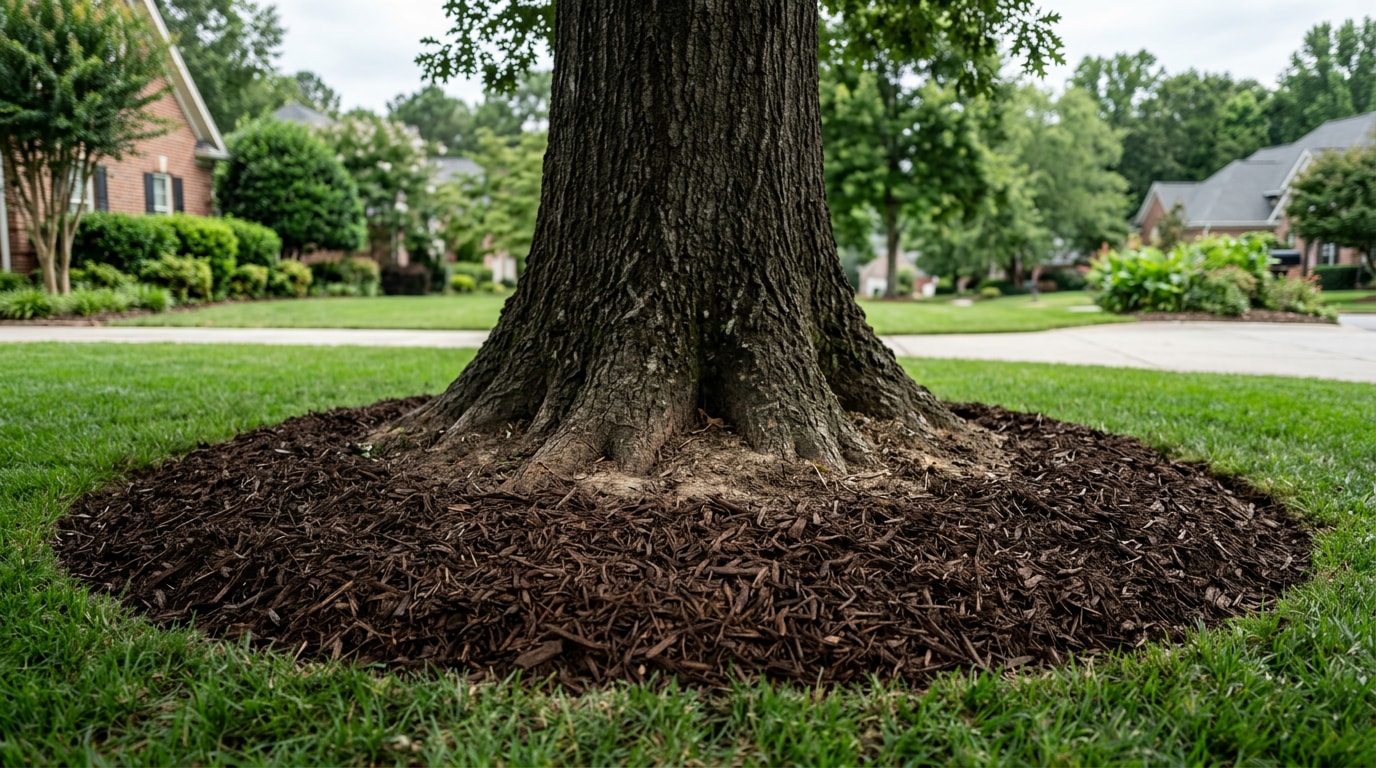
Mulch around trees in Cary, NC should sit 2 to 4 inches deep, stop a few inches short of the trunk, and reach out toward the drip line instead of piling into a mound against the bark. Get the depth or material wrong and you can choke roots of oxygen or invite rot in Cary's heavy clay and humid summers. This guide walks through the depth, material, and installation details that keep a mulch ring working for your trees instead of against them.
How Deep Should Mulch Be Around Trees?
Depth is the most common mistake homeowners make when mulching a tree. Too thin and weeds push through. Too deep and roots start to suffocate.
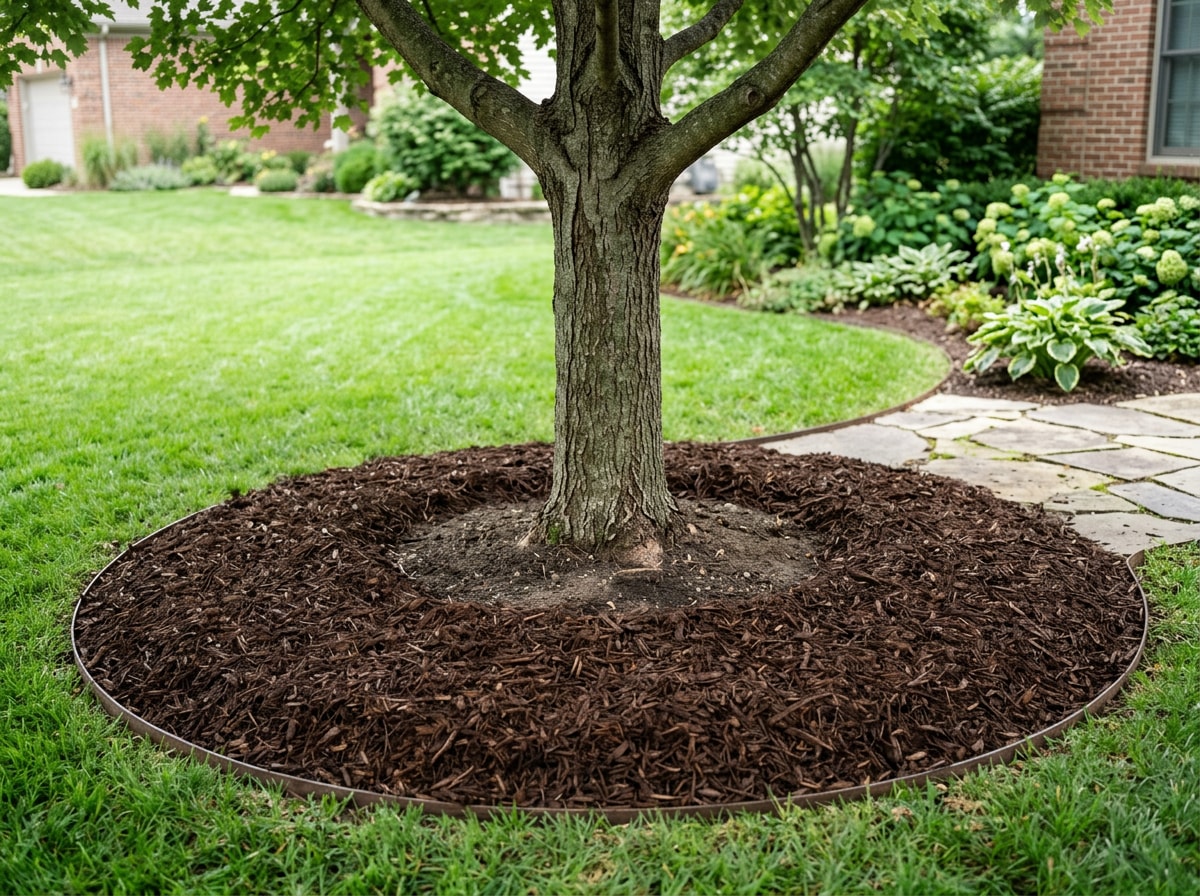
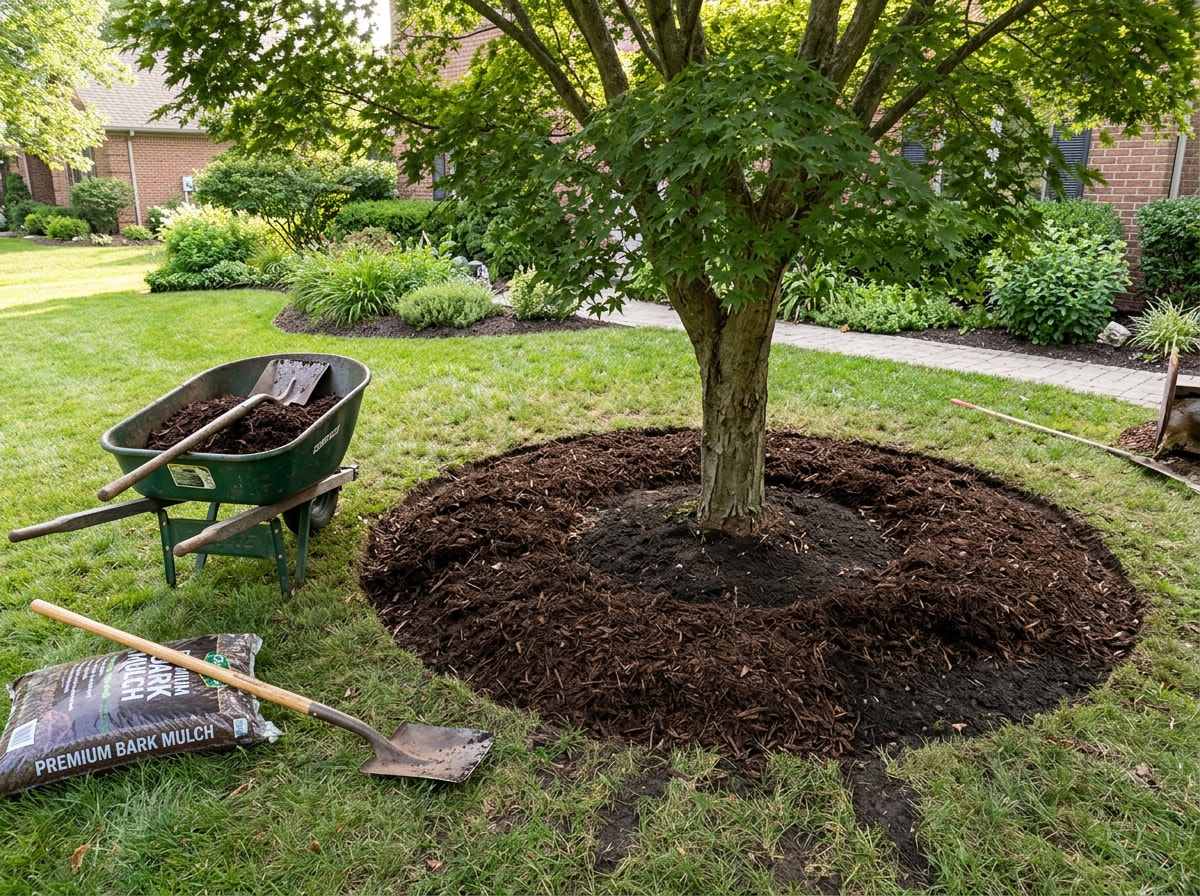
- Depth: 2 to 4 inches of settled mulch across the whole ring.
- Width: Out to the tree's drip line, the outer edge of the canopy, whenever the yard layout allows it.
- Trunk gap: 2 to 3 inches of bare soil around the root flare. Mulch should never touch bark.
Piling mulch into a cone against the trunk, often called a mulch volcano, causes a different problem than simply running thin. When mulch is piled too deep, roots need to grow near the surface to reach oxygen, and those surface roots can circle back on themselves and eventually girdle and strangle the tree , according to NC State Extension. The same guidance notes that shallow mulch decomposes slowly, while a deep pile starts to compost and generates heat that damages both roots and trunk .
Respecting the drip line matters more in Cary yards than most homeowners realize. In the Triangle's dense clay, most of a shade tree's feeder roots grow in the upper 8 inches of soil, the same zone turfgrass roots occupy — which is exactly where a properly spread mulch ring does the most good.
Why Mulch Matters in Cary's Clay Soil and Summer Heat
A mulched ring does three jobs at once: it holds moisture, blocks weeds, and buffers soil temperature.
Mulch slows evaporation, so roots stay hydrated longer between rain events or irrigation cycles. That matters most for young trees still building out their root systems. A consistent layer also blocks sunlight from weed seeds near the trunk, cutting down on competition for water and nutrients.
Temperature buffering is the benefit homeowners notice least but need most. Mulch insulates roots from Cary's summer heat spikes and winter cold snaps, reducing the stress that leaves trees more vulnerable to pests and disease.
If you'd rather skip the shoveling, our crews handle material selection and spreading as part of our landscape contractor services for properties across the Cary, NC area. Get a free estimate and we'll tell you exactly what your trees need before any truck shows up.
Choosing the Right Mulch Material for Your Trees
Not every mulch performs the same way around a root zone. Some break down fast and feed the soil. Others resist pests but come with tradeoffs worth knowing before you order a truckload.
Organic Mulch: Hardwood Bark, Pine Bark Nuggets & Dyed Wood Chips
Organic mulch remains the most common choice for tree beds because it breaks down over time and returns nutrients to the soil.
- Hardwood bark mulch decomposes fastest, usually needing a top-off within a year, but it builds organic matter in compacted clay quicker than coarser materials.
- Pine bark nuggets break down slower and hold their shape longer, which suits larger beds that don't get refreshed often.
- Dyed wood chips offer the most consistent color. The dye is cosmetic and doesn't change how the mulch performs around roots.
All three work well as long as they're kept off the trunk and refreshed before they compact into a crust that blocks water.
Cedar and Cypress: Weighing Insect Resistance Against Sourcing
Cedar and cypress both contain natural oils that make them more insect-resistant than untreated hardwood, which is why homeowners with ant or termite concerns reach for them.
Cypress carries a sourcing caveat worth knowing before you buy. The Florida-Friendly Landscaping Program does not recommend the use of cypress mulch, since it may not be harvested sustainably , a position echoed by extension programs across several southern states because much of the commercial supply is cut from wetland forests rather than cultivated stands. Cedar offers similar pest-resistant properties without that sourcing question, since it's typically milled from cultivated trees. For homeowners who want insect resistance without the wetland tradeoff, cedar is the more sustainable pick of the two.
Why Rubber Mulch Belongs on Playgrounds, Not Tree Beds
Rubber mulch is built from recycled tires for durability, which is exactly why it suits playgrounds better than root zones. It doesn't decompose, so it adds nothing to soil biology, and it can trap heat against the root flare instead of buffering it. Organic mulch is the better call for anything planted and growing.
Mulch vs. Pine Straw Around Trees
Mulch vs. pine straw comes down to material density, how fast each breaks down, and how it interacts with Cary's clay soil.
| Factor | Hardwood Mulch | Pine Straw |
|---|---|---|
| Decomposition speed | Slower, lasts a season or more | Faster, often needs refreshing twice a year |
| Best use around trees | Shade trees, root zones | Slopes, acid-loving shrubs |
| Organic matter added | High, benefits clay soil | Lower per application |
| Typical refresh schedule | Annual top-off | Twice yearly |
A common myth is that pine straw acidifies soil over time. It doesn't hold up under scrutiny. The acidic reputation pine straw carries mostly reflects soils that were already acidic before the pines grew there, not an effect the needles themselves cause , according to NC State Extension's Lee County Center. For trees, hardwood mulch is generally the better match since it holds moisture longer and decomposes into the organic matter Cary's clay badly needs. Pine straw tends to suit slopes and acid-loving shrubs better than individual shade trees.
Professional Mulch Installation Process
Mulching a tree correctly takes more than dumping a few bags at the base.
- Clear the bed. Remove old, compacted mulch, debris, and weeds down to bare soil.
- Spread to the drip line. Extend the ring out toward the canopy's outer edge, since that's where most feeder roots are actively absorbing water and nutrients.
- Keep it 2 to 4 inches deep. Hand-spread for an even layer rather than dumping piles that need raking out later.
- Leave the trunk gap. Keep mulch 2 to 3 inches off the bark so it stays dry.
Bed prep is where most DIY jobs go wrong, since old compacted material has to come out before new mulch goes down. It's the same groundwork principle behind our site preparation services: the prep work determines whether the finished job holds up.
For a closer look at what a mulch job typically costs and how the process plays out from delivery to final shaping, our mulching cost and process guide breaks down the numbers homeowners ask about most. And if you want the whole thing handled without lifting a shovel, visit Paradise Backyard to see our full range of landscaping services before requesting a quote.
FAQ
How deep should mulch be around trees?
2 to 4 inches, settled. Going deeper traps moisture and cuts off oxygen to the root zone, which stresses the tree rather than helping it.
Should mulch touch the tree trunk?
No. Piling mulch against the bark, sometimes called a mulch volcano, traps moisture against the trunk and invites rot, pests, and girdling roots. Leave 2 to 3 inches of bare soil around the root flare, where the trunk widens into the roots.
How wide should the mulch ring be?
Extend it to the tree's drip line, the outer edge of the canopy, whenever your yard layout allows. That's where the bulk of a tree's feeder roots are working, so it's also where mulch does the most good.
How often should mulch around trees be replaced?
Most beds need a fresh top-off once a year, typically in spring before Cary's summer heat sets in. Full replacement, removing old compacted mulch down to soil, is usually necessary every 2 to 3 years depending on material.
What's the best mulch for trees in Cary, NC?
Hardwood bark or pine bark nuggets are the most reliable all-around choice for Cary's clay soil, since they decompose into organic matter the soil needs while holding moisture through dry stretches. Cedar is worth the upgrade if insect resistance is a priority.
How much does mulch installation cost?
Cost depends on material, bed size, and how much square footage the job covers. Cedar and cypress typically run higher than basic hardwood. Request a free quote for pricing based on your property.
Will mulch attract insects to my yard?
Some organic mulches can attract insects if piled too thick or kept too wet, but proper depth and trunk spacing keep that risk low. Cedar and cypress offer natural insect-resistant properties if pest pressure is already a concern in your yard.