Turf maintenance in Chapel Hill, NC means working with dense Piedmont clay, humid summers, and two different grass-growing seasons instead of one. Most national lawn-care advice skips that nuance and gives you a generic calendar that doesn't match what actually happens in a Triangle-area yard. This guide breaks down what local turf needs month by month, what the research says about the diseases hitting Chapel Hill lawns hardest, and where it makes sense to call in a crew.
Chapel Hill's Clay Soil and Climate: Why Turf Maintenance Here Is Different
Chapel Hill sits in USDA hardiness zone 8a , a classification that puts the region squarely in North Carolina's humid transition zone. That means hot, humid summers and mild winters, a climate that can technically support both cool-season and warm-season grasses but stresses turf in different ways depending on the species.
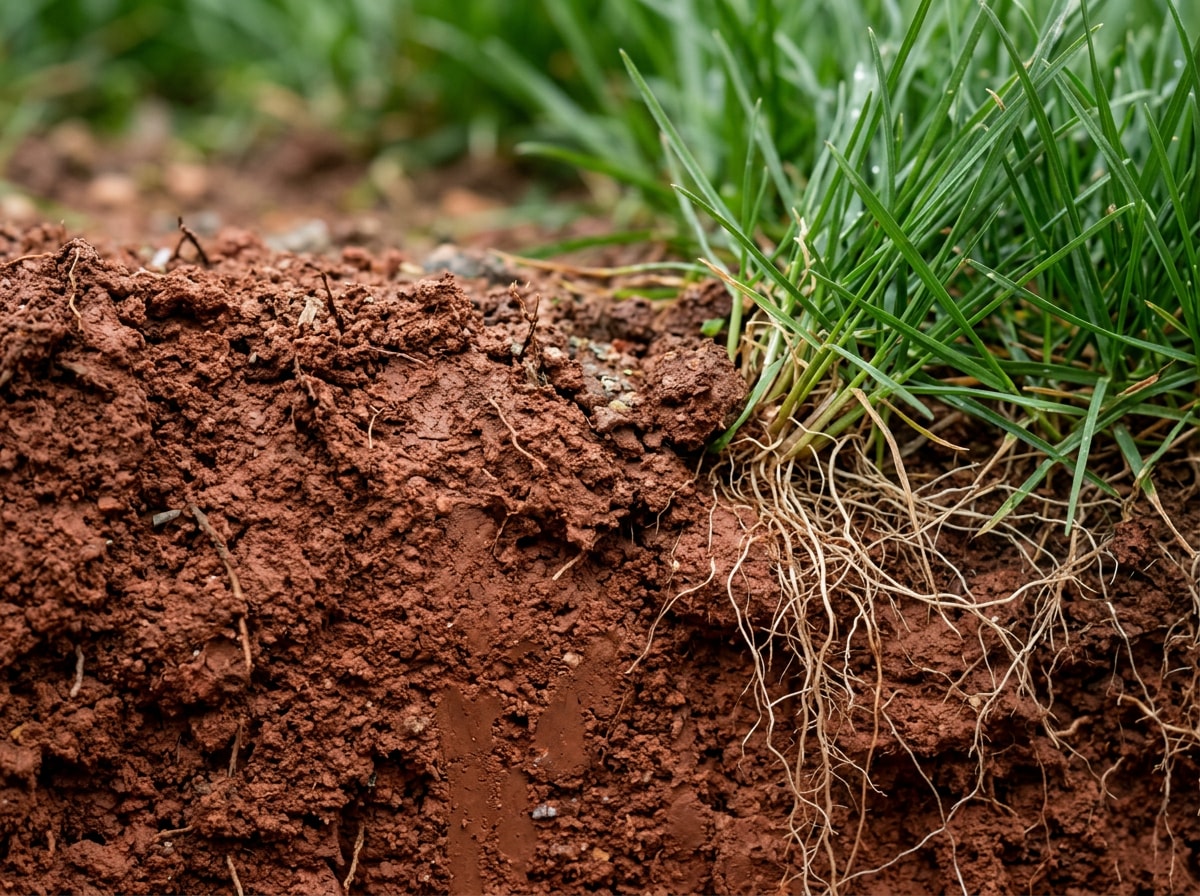
The bigger challenge isn't the air, it's the ground underneath it. Red Piedmont clay compacts under foot traffic and mower wheels, drains slowly after heavy rain, and tends to run acidic, which limits how well grass roots take up nutrients.
| If you notice... | Your lawn likely needs... |
|---|---|
| Water pooling after rain | Aeration and improved drainage |
| Yellowing despite fertilizer | A soil pH test and lime application |
| Thinning in shaded areas | Shade-tolerant seed or adjusted mowing |
| Brown patches in humid spells | Adjusted mowing and watering habits |
When clay compaction is severe enough that water consistently pools in the same low spots, aeration alone won't fix it. That's a grading and drainage problem, and it usually calls for site preparation work or a dry stream bed to redirect runoff away from the root zone. The official USDA Plant Hardiness Zone Map lets you confirm your exact zone by ZIP code if you're planning new plantings alongside turf repairs.
Fertilization and Nutrient Management for Chapel Hill Lawns
Fertilization timing depends entirely on grass type. Cool-season tall fescue benefits most from fall and early-spring nitrogen, while warm-season bermudagrass responds better to late-spring and summer feeding.
NC State Extension is specific about the timing window for fescue: avoid any nitrogen fertilization of cool-season grasses, such as tall fescue, after the February application until September for the North Carolina central Piedmont . That six-month gap surprises a lot of homeowners who assume more feeding equals a greener lawn.
Because Piedmont clay holds nutrients unevenly, a soil test should come before any fertilization program. Guessing at nitrogen rates wastes money and can feed weeds instead of grass. Most nutrient plans pair spring and fall nitrogen applications with soil amendments like lime based on those test results.
If your lawn sits next to planting beds that already get regular care, a coordinated landscape design plan keeps turf, shrubs, and irrigation zones working together instead of competing for water and nutrients.
The Three Problems Most Chapel Hill Lawns Fight
Local turf pathology data gives a clearer picture of what's actually attacking Chapel Hill lawns than most lawn-care sites let on. Based on samples submitted to the NC State turf diagnostic lab since 2008, brown patch shows up in 28% of samples, gray leaf spot in 10%, and Pythium blight in 6% . Brown patch is by far the most common disease problem in area fescue, not an exotic or rare issue.
Here's how to recognize the main culprits:
- Brown patch:
In North Carolina, brown patch typically appears on tall fescue from mid- to late May, but symptoms often don't develop until early to mid-June. It shows up as roughly circular dead patches, often worsened by evening watering or mowing too short.
- Gray leaf spot:
Gray leaf spot is a particularly damaging disease of tall fescue in North Carolina when nighttime temperatures stay above 72°F and humidity or rain continues. This is the disease to watch for during Chapel Hill's muggiest August stretches.
- Crabgrass and clover: These spread fastest in warm, wet soil. A pre-emergent herbicide applied in early spring, before soil temperatures climb, stops most crabgrass before it germinates.
A simple soil pH test tells you whether acidic clay is compounding any of these problems. This is general education, not a diagnosis. Persistent, recurring dead patches deserve an on-site look rather than a guess from a blog post.
Aeration, Mowing Height, and Watering Habits That Actually Help
Clay soil compacts under foot traffic, mower wheels, and heavy rain, squeezing out the air and water roots need to grow deep. Annual fall core aeration breaks up that compaction so water and nutrients reach the root zone instead of running off the surface.
Mowing height matters more than most homeowners realize. NC State Extension's research is direct on this point: tall fescues perform best when mowed at a height of 3.5 inches, and should never be mowed shorter than 2.5 inches . Cutting fescue short to "reduce mowing" actually weakens roots and opens the door to the brown patch and gray leaf spot pressure covered above.
Watering habits compound the problem or fix it. Nationally, residential outdoor water use across the United States accounts for nearly 8 billion gallons of water each day, mainly for landscape irrigation , and a lot of that is wasted on shallow, frequent watering that never reaches the root zone. Deep, infrequent watering, roughly an inch per week, builds stronger roots than daily sprinkling. If you're establishing new turf rather than maintaining an existing lawn, our watering guide for new sod in Chapel Hill walks through the first critical weeks in detail. On the equipment side, replacing a clock-based controller with a WaterSense labeled irrigation controller can save your home up to 15,000 gallons of water annually , according to EPA WaterSense.
Choosing the Right Grass: Seeding, Sodding, and Fall Timing
Tall fescue is the default choice for most Chapel Hill lawns because it tolerates shade and the region's borderline climate better than other cool-season grasses. Bermudagrass suits full-sun yards that can handle a brown dormant period in winter.
Sodding gives instant coverage at a higher upfront cost. Seeding costs less but takes patience and a narrow window to get right. NC State Extension's regional data pins down that window precisely: the Piedmont window is September 1 to October 1 for tall fescue, and the NC State standard tall fescue overseeding rate is 6 pounds per 1,000 square feet for a full renovation.
One common myth is worth retiring here. Homeowners often assume dethatching is an annual chore, but Extension states that for tall fescue it is generally not necessary to remove thatch , since fescue is a bunch-type grass that doesn't build up the same thatch layer spreading grasses do. Skipping that step saves time and avoids unnecessary stress on the turf.
A common mistake in humid Chapel Hill falls is overwatering new seed, which invites the same disease pressure covered earlier in this guide. Light, frequent watering for the first two weeks, then a gradual shift to deeper, less frequent irrigation, gets new grass established without feeding fungus.
A Chapel Hill Lawn Care Calendar by Season
| Season | Priority tasks |
|---|---|
| Late Winter / Early Spring | Pre-emergent crabgrass control, light nitrogen for green-up, soil test if due |
| Late Spring / Summer | Mow at 3.5 inches, deep watering (1 inch/week), watch for brown patch and gray leaf spot |
| Early-Mid Fall | Core aeration, overseed tall fescue (Sept 1 to Oct 1 window), fall nitrogen application |
| Late Fall / Winter | Final mow at slightly lower height, clear leaf debris, minimal nitrogen until next spring |
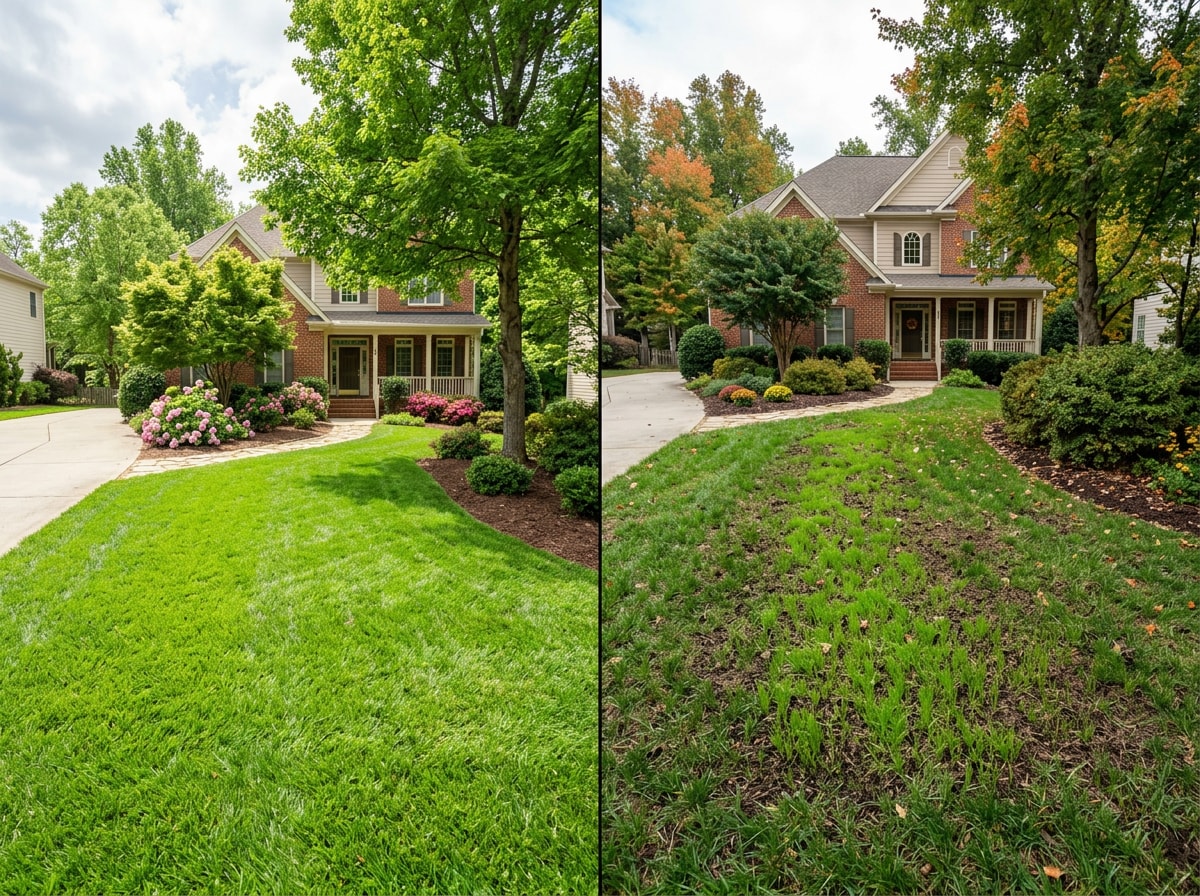
Fall does more for long-term turf density than any single spring task. Aerating and overseeding together lets new seed fall directly into open soil channels instead of competing with thatch or compacted ground.
DIY vs. Professional Turf Maintenance: When to Call a Pro
Mowing, basic watering, and spot-treating weeds are reasonable DIY tasks for most homeowners. Soil testing, calibrated fertilizer and lime applications, core aeration with proper equipment, and disease diagnosis are where professional help pays for itself, both in results and in time saved.
If your lawn has chronic drainage issues, patchy shade dieback, or recurring disease in the same spots every summer, those are signs the turf problem is tied to grading, soil structure, or a landscape design issue rather than anything a mowing schedule can fix. Our landscape contractor team handles that kind of root-cause work across the Triangle, including the Chapel Hill area. Get a free estimate if you'd rather hand off the soil testing, timing, and equipment side of turf care to someone who does it daily.
You can see examples of completed grading, drainage, and landscape work on our homepage.
FAQ
What is turf maintenance?
Turf maintenance covers the ongoing care that keeps grass healthy year-round: mowing at the correct height, fertilizing on a schedule matched to grass type, aerating compacted soil, controlling weeds and disease, and watering correctly for the season.
How often should I mow my lawn in Chapel Hill?
Most lawns need weekly mowing from March through November. Tall fescue often needs more frequent cuts during its spring and fall growth flushes, and should stay at 3.5 inches rather than being cut short.
When is the best time to aerate a lawn in Chapel Hill?
Fall is the best time to aerate, since it relieves clay soil compaction right before cooler weather supports root recovery, and it pairs naturally with fall overseeding.
What is the difference between lawn service and lawn care?
Lawn service typically means routine mowing, trimming, and cleanup. Lawn care refers to deeper inputs, fertilization, weed control, and seeding, that build healthy turf over time rather than just maintaining its appearance.
Do I need to dethatch my tall fescue lawn every year?
No. Tall fescue is a bunch-type grass that doesn't build up a significant thatch layer the way spreading grasses do, so routine dethatching usually isn't necessary.
How often should I schedule professional lawn care in Chapel Hill?
Most lawns do well with two to four nutrient applications per growing season, alongside weekly mowing and consistent watering. Lawns with chronic drainage or disease problems may need a one-time site evaluation in addition to a seasonal schedule.