Garden paving in Chapel Hill, NC has to work with Piedmont red clay, humid summers, and winter freeze-thaw swings, not against them. Pick the wrong material or skip proper base prep, and a patio that looks great in May can crack or pond water by the following spring. This guide covers 2026 material costs, the ideas that fit Chapel Hill yards best, and the site-prep steps that make paving last.
Garden Paving Materials and 2026 Costs in Chapel Hill
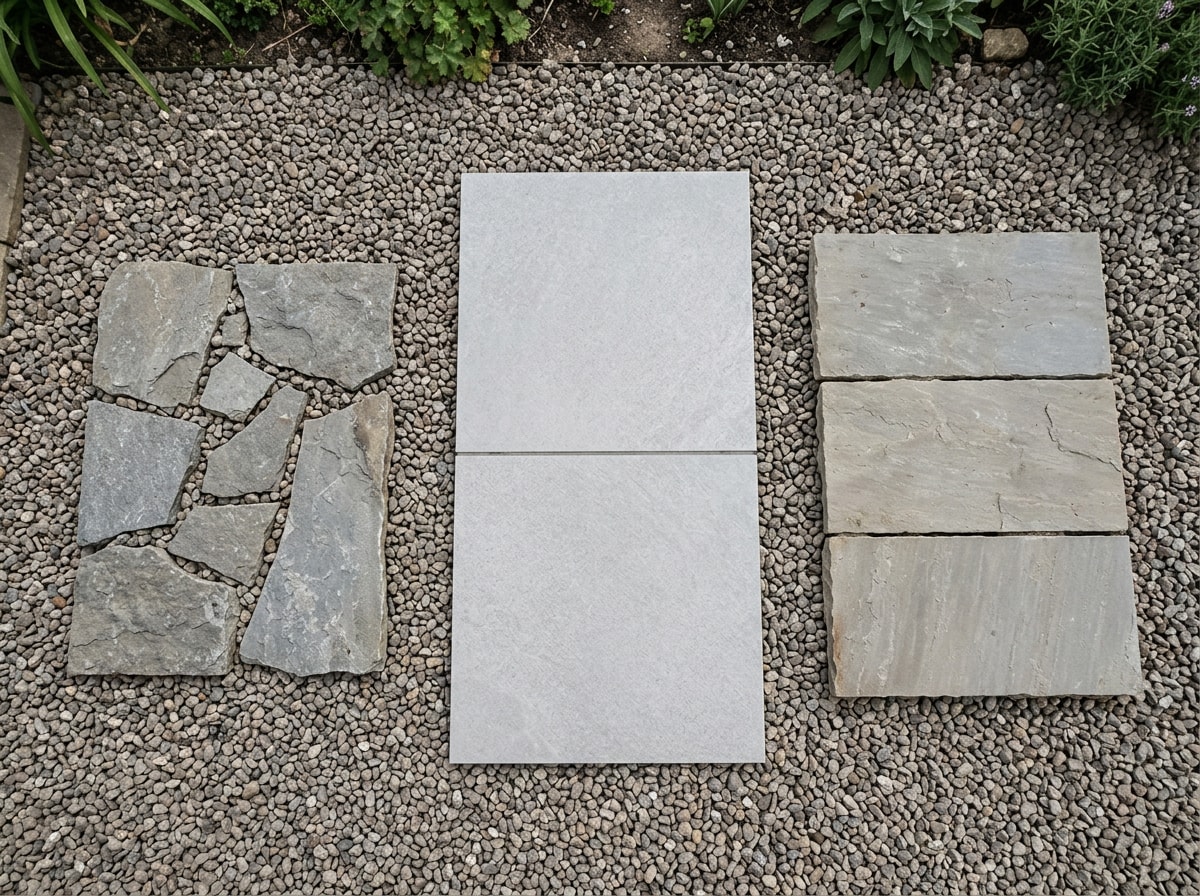
Garden paving materials fall into four main categories: natural stone, concrete pavers, porcelain, and flagstone. Each reacts differently to Chapel Hill's clay soil and freeze-thaw cycles, so the right pick depends on budget, style, and how much upkeep you're willing to take on.
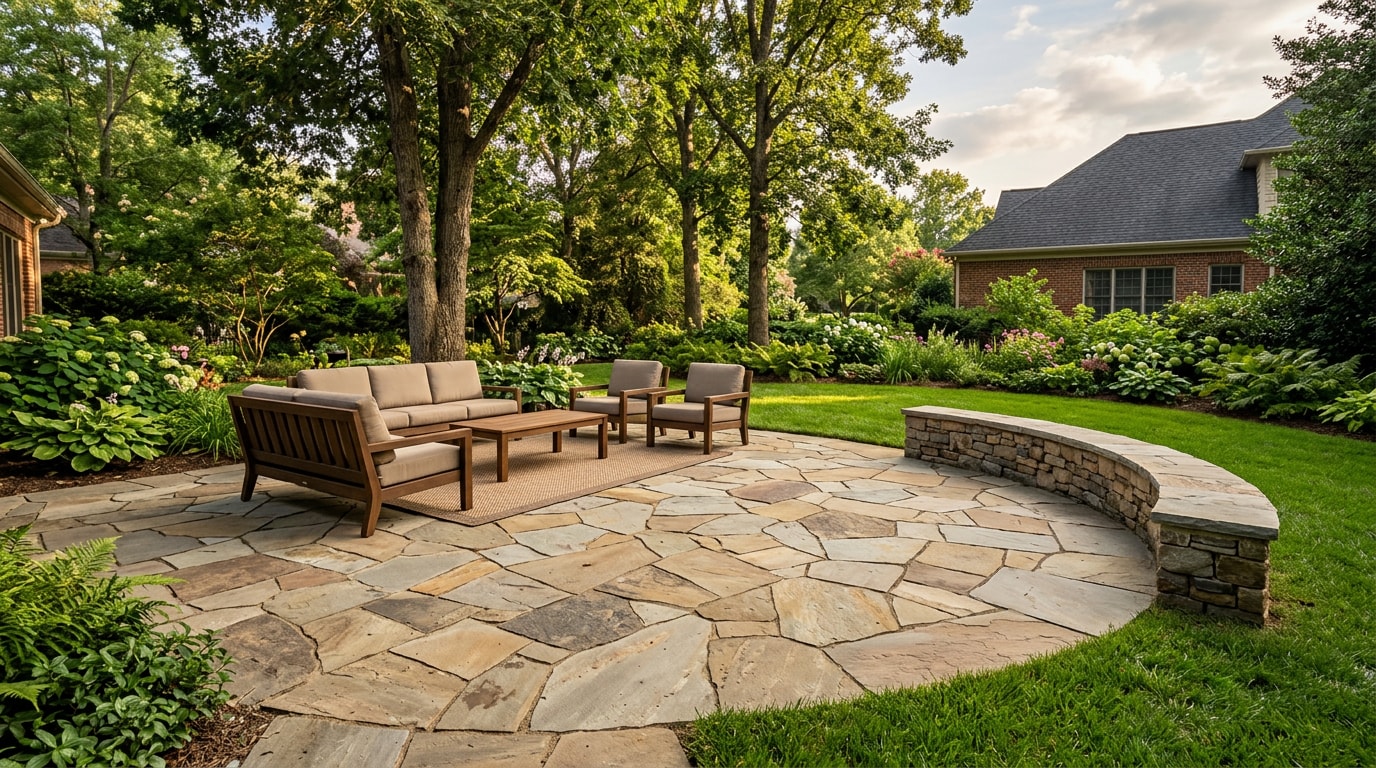
Modern designs tend to favor sawn stone or large-format porcelain pavers in cool grays, while traditional gardens lean toward irregular flagstone or tumbled concrete with a worn, informal edge. Here's how the main options compare for a typical Chapel Hill project:
| Material | 2026 Price per Sq. Ft. | Durability in Clay/Freeze-Thaw | Maintenance |
|---|---|---|---|
| Flagstone | $15–$30 | Good, if base depth is correct | Occasional re-sanding joints |
| Porcelain pavers | $20–$35 | Very good, low water absorption | Minimal, easy rinse-clean |
| Natural stone patio (cut) | $18–$32 | Good, needs solid base | Periodic sealing |
| Concrete pavers | $10–$20 | Fair to good, can heave in poor soil | Low, occasional re-leveling |
These are general planning numbers for the Triangle market. Soil conditions, patio size, and site access all move a final bid up or down, so a written estimate always beats an online range. Get a Free Estimate once you know roughly which material fits your budget.
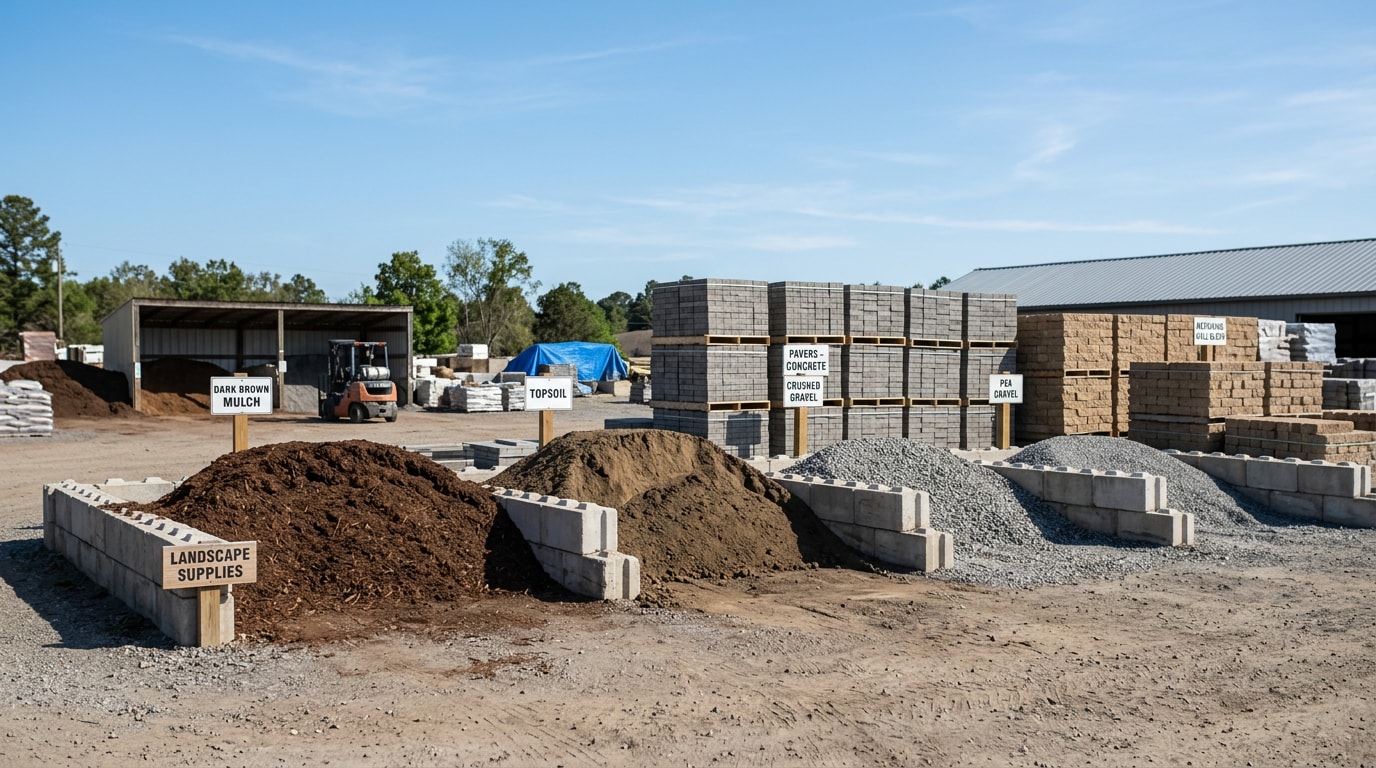
Base depth is the detail local installers watch most closely. Minimum aggregate base thickness for walks should be 4 to 6 in. (100 to 150 mm), driveways 6 to 8 in. (150 to 200 mm), and streets 8 to 12 in. (200 to 300 mm) , with deeper bases needed on weaker or wetter soils. That last part matters here: clay soils, which tend to hold excessive amounts of water and become compacted easily, present some tricky problems . On patios our crew has rebuilt after a failed DIY attempt, a base that's too shallow for this soil is almost always the culprit. Our paver installation) and site preparation teams dig and compact to depth before a single stone goes down, which is the step that separates a patio that lasts decades from one that heaves in year two.
Plan Your Paved Space Before You Buy Materials
Before picking a single paver, decide what the space needs to do. A dining patio wants a flat, stable surface near the kitchen door. A lounging nook can sit farther back, tucked into shade. A transition strip between lawn and flowerbeds might just need enough paving to keep feet dry after rain.
Pick the exact spot by checking three things:
- Access. How easy is it to reach from the kitchen or back door?
- Privacy. Does it feel screened from neighbors, or exposed?
- Drainage. Does water sit there after a storm, or move away quickly?
Sun exposure matters more in the Piedmont than people expect. South-facing patios bake by July, so afternoon shade from trees or a pergola changes which materials make sense. If you're also refreshing patchy lawn space while you plan the paved area, our guide on how to reseed a lawn in Wake Forest, NC covers timing that pairs well with hardscape projects. For the layout itself, our landscape design team can map paving, beds, and lawn together before anyone breaks ground.
Garden Paving Ideas for Every Chapel Hill Yard
Once the site and material are set, the layout is where a garden paving project actually earns its keep. These are the ideas that come up most often on Chapel Hill properties.
Small Garden Paving Ideas
A narrow lot can still feel generous with the right layout. Mixing large-format slabs with smaller infill pieces breaks up a compact patio without making it feel busy. Light-colored stone reflects more light than dark pavers, which helps in yards shaded by mature oaks. Scale furniture down too. An oversized dining set will swallow a small patio before the paving even gets noticed.
Raised Patio Ideas
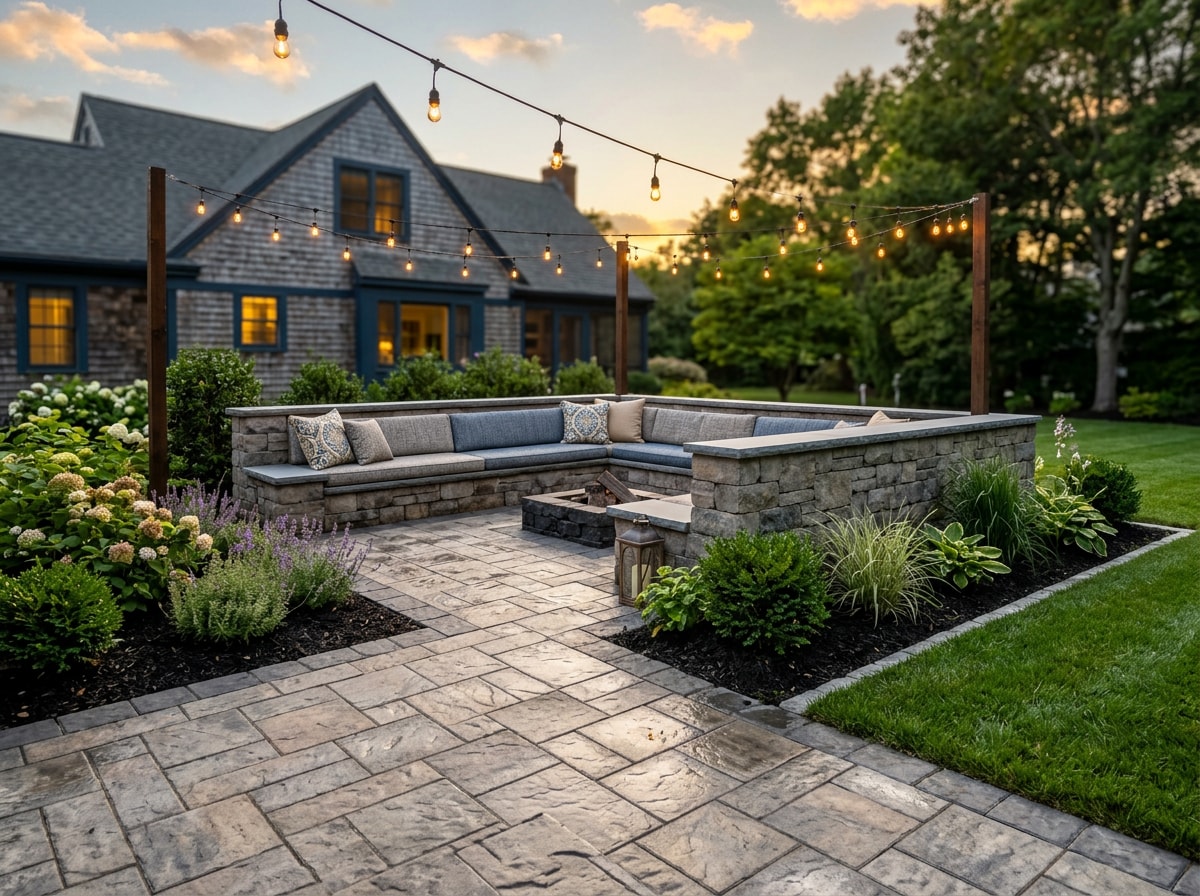
A raised patio sets a seating area apart from a sloped or oversized yard, almost like a deck built from stone instead of wood. It works well on Chapel Hill lots with natural grade changes, where a flat patio would otherwise need heavy excavation. Even a single step up adds visual separation, and a low seating wall along the edge turns that step into usable seating instead of just a transition.
Back Garden Paving Ideas
Back garden paving can extend your living space outdoors when it includes a built-in planter, a low seating wall, or a fire pit ledge. These additions turn a flat slab into a destination instead of just a floor.
Indoor-outdoor flow matters here too. Choosing a paving tone that echoes your interior flooring, a warm gray to match hardwood, for instance, makes the transition from kitchen to patio feel seamless rather than like stepping into a separate space.
Pathways and Walkways
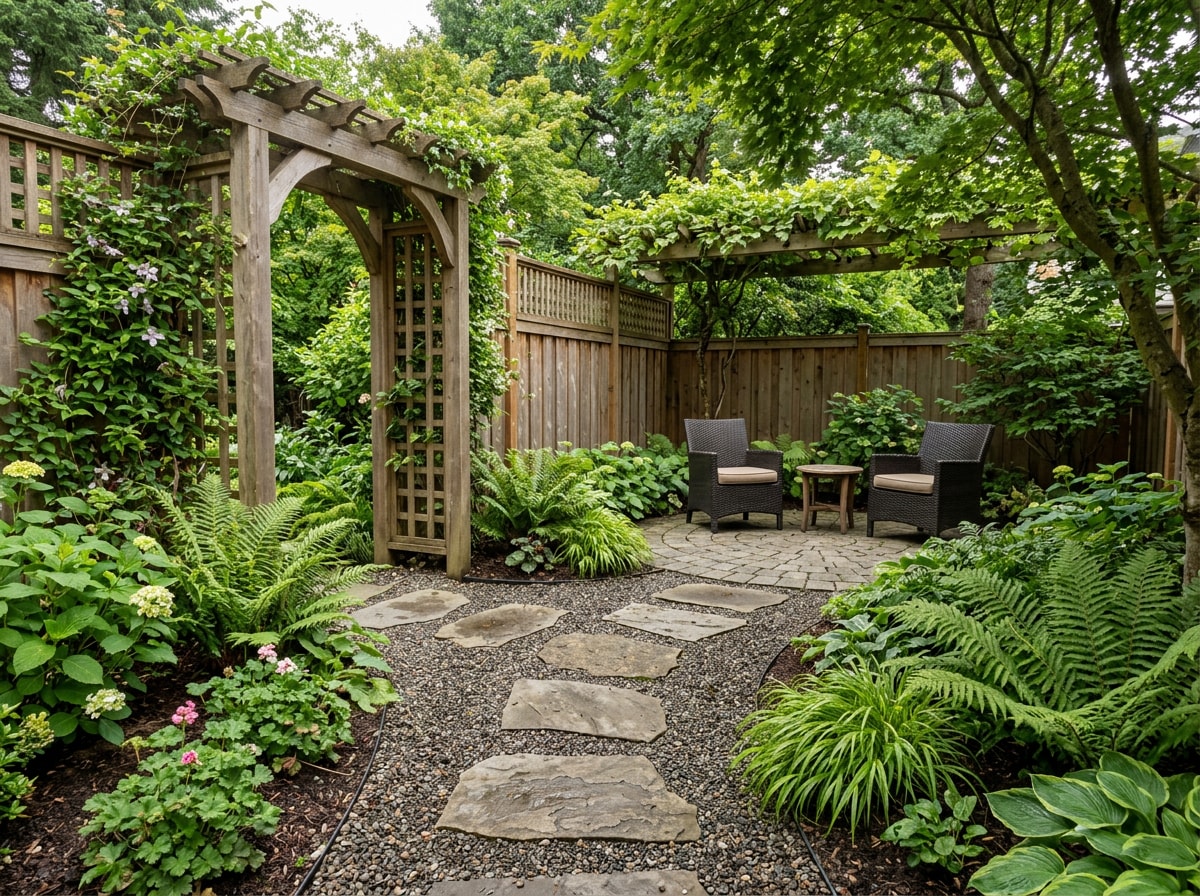
Garden pathway ideas range from simple gravel strips to structured stepping stones, and the right choice depends on foot traffic. A gravel path connecting a side gate to the patio costs less and drains well, while a herringbone brick walkway adds formality near a front entrance. Textured stone or tightly spaced stepping stones also cut down on slip risk after Chapel Hill's frequent summer storms. Our walkway installation page covers layout options if you're planning a longer path.
Budget-Friendly Garden Paving Ideas
Cheap garden paving doesn't have to look cheap:
- Reclaimed brick costs far less than cut stone and ages well.
- Broken concrete ("urbanite") reuses material you might otherwise pay to haul away.
- Gravel infill between stepping pavers stretches a smaller stone budget across a larger area.
- Steel or timber edging keeps loose materials contained without adding much cost. A simple run of stone edging does the same job with a more finished look.
If you're weighing options for a budget patio, get real numbers before committing to a material. Request a free estimate to compare affordable paving options for your yard, or browse our completed projects for ideas.
Why Hire a Professional for Garden Paving in Chapel Hill, NC
DIY paving looks approachable until the clay soil underneath starts shifting. Garden paving in Chapel Hill needs a compacted base, correct slope for drainage, and attention to how the soil behaves through freeze-thaw cycles, details that are easy to get wrong without experience.
Permits are another reason to loop in a professional early. The Town of Chapel Hill's building department notes that residential permits are required for any project consisting of the construction, installation, repair, remodel, alteration, and/or demolition of decks, patios, and pavers, driveways , among other work. Requirements vary by project size and drainage impact, so it's worth checking the Town of Chapel Hill residential permits page before breaking ground. Our patio installation team handles that groundwork as part of every project, and our hardscape contractor services cover the broader paving and masonry work that often comes with it.
Lasting Durability
A properly built base resists cracking even through Chapel Hill's swing between summer heat and winter freezes. Pavers set on compacted gravel flex slightly instead of breaking, which is why a correctly installed patio can outlast a poured concrete slab by years.
Low Maintenance
A low-maintenance patio needs little more than an occasional rinse and a quick weed sweep between joints. If one paver cracks or stains, it can be popped out and replaced individually instead of repouring an entire section the way you would with concrete.
Enhanced Property Value
Curb appeal sells, and a well-built paver patio is one of the more visible upgrades a buyer notices during a walkthrough, particularly in neighborhoods where outdoor living space is in demand. See examples from other Chapel Hill, NC properties in our project gallery, or visit the Paradise Backyards NC homepage for the full range of services we bring to a paving project.
FAQ
How Long Does a Paver Patio Last in Chapel Hill, NC?
A properly installed paver patio typically lasts decades, depending on base preparation, material choice, and maintenance. Pavers set on a well-compacted base with sand-filled joints hold up better through freeze-thaw cycles than a shallow or poorly drained installation.
Do I Need a Permit for Garden Paving in Chapel Hill?
Often, yes. Residential permits are required for construction, installation, repair, remodel, alteration, or demolition work that includes decks, patios, and pavers . Requirements depend on project size, land disturbance, and drainage impact, so confirm with the Town of Chapel Hill's permit office before starting work.
Do Paver Patios Require Sealing?
Sealing isn't required, but it has real benefits. While not mandatory, sealing offers several benefits , including easier stain removal and richer color. Sealers also need reapplication every 3-5 years , so factor that into your long-term maintenance plan before choosing a sealed finish.
Are Pavers Better Than Concrete Patios?
Pavers generally outperform poured concrete in flexibility and crack resistance, since individual units can shift slightly without damaging the whole surface. They also offer more design variety in color, shape, and pattern than a single poured slab.
What's the Best Paver Base for Chapel Hill's Clay Soil?
A compacted aggregate base at or above standard depth, with attention to drainage and slope, is the safest bet on Piedmont clay. Skimping on base depth is the single most common reason a paving project fails early in clay-heavy soil, which is why our crews treat site prep as its own phase rather than a shortcut.
How Much Does a Paver Patio Cost?
Paver patio cost in the Chapel Hill area typically runs $15 to $35 per square foot installed, depending on material, patio size, and how much site prep the ground needs. Clay soil or drainage issues can add to site prep costs, so a firm quote always beats a rough estimate. Get a Free Estimate for a number specific to your yard.