Hardscaping in Fuquay-Varina, NC means building patios, walls, and walkways that can survive Wake County's clay rather than just look good on installation day. Most guides to this topic skip the one detail that actually determines whether a project lasts: what's underneath it. This guide covers that, plus real cost ranges, permit rules, and the process we use on every job.
What Is Hardscaping, and Why It Matters More Here
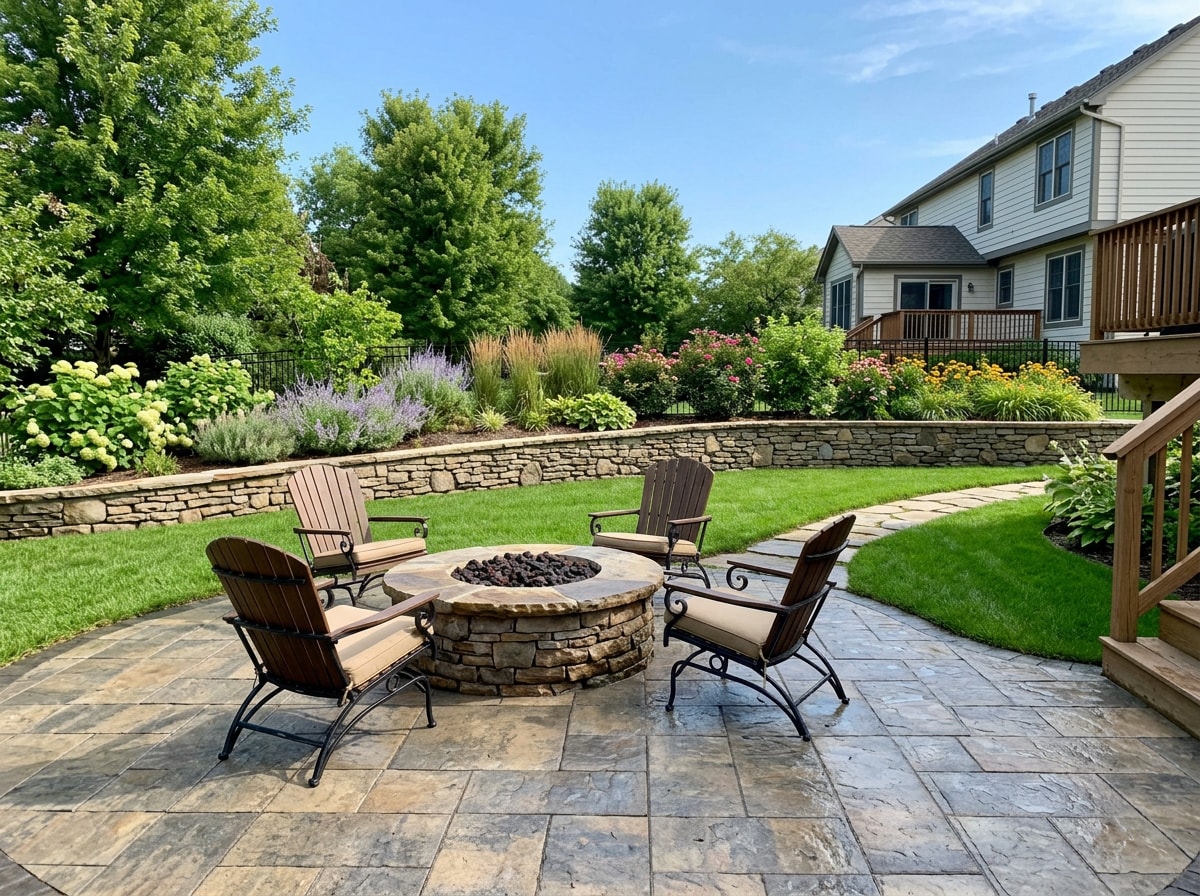
Hardscaping covers the non-living, structural features of a yard: patios, walkways, retaining walls, fire pits, and outdoor kitchens. It's the counterpart to softscaping, which handles lawns, trees, and plant beds. If you're weighing which one your yard needs first, our softscape services guide for Fuquay-Varina breaks down where the two overlap.
Fuquay-Varina's newer subdivisions tend to sit on larger lots with real grade changes, which means hardscape elements end up doing structural work, not just decorative work. A retaining wall on a sloped lot here is holding back soil. A patio base is fighting clay that swells and shrinks with every rain. That's a different engineering problem than a flat lot in a older neighborhood, and it changes how the work should be built.
The Soil Problem Most Quotes Don't Mention
Wake County's red clay subsoil is the reason patios settle, walls bow, and pavers heave within a few years of a rushed install. Clay holds water at the surface instead of letting it drain, and it shrinks and swells as moisture levels change through the seasons.
North Carolina State Extension notes that water moves slowly into clay soil, and clay soil compacts very easily when wet , which is exactly the behavior that pushes against a hardscape base from below. The Extension's own guidance for hard surfaces is to plan around that reality from the start: when installing a new sidewalk or patio, consider using gravel, porous concrete, stepping-stones, wood decking, or bricks on a sand base .
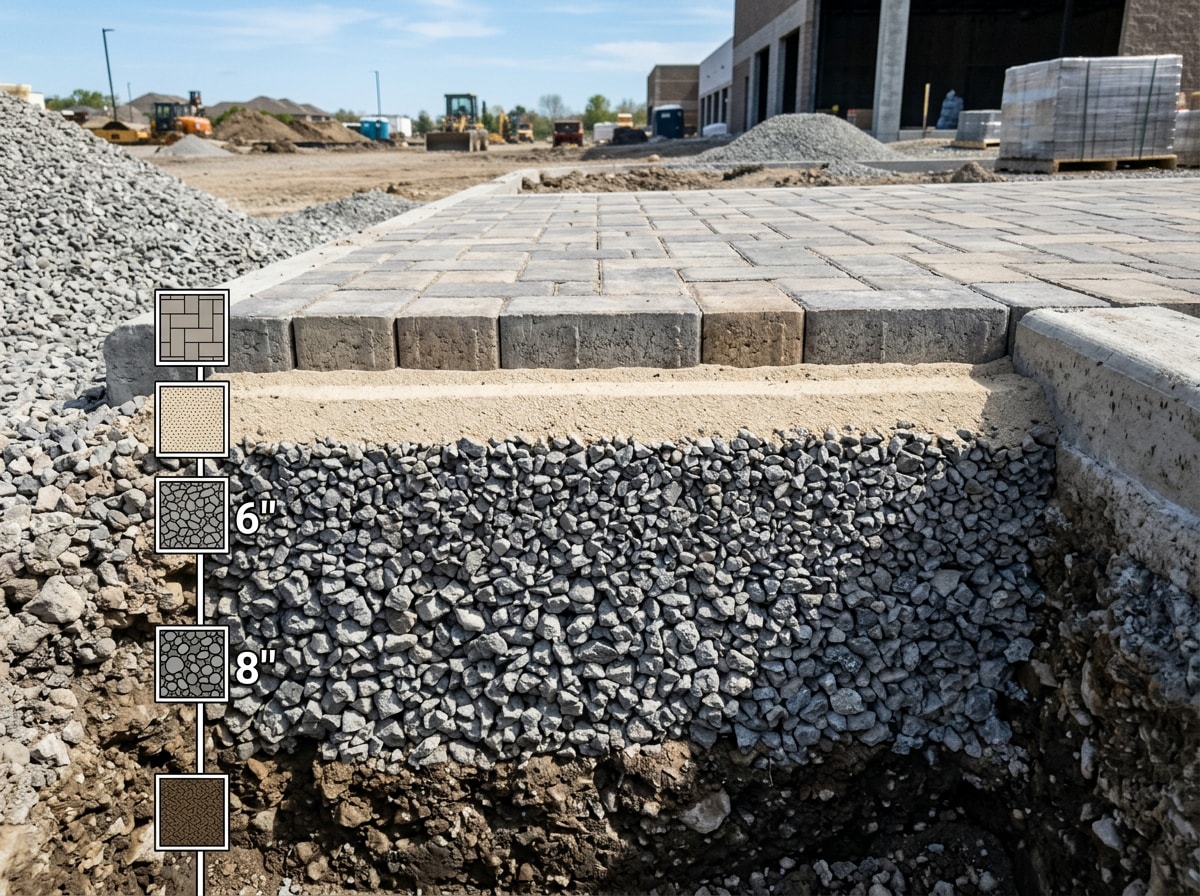
The construction standard published by the Concrete Masonry & Hardscapes Association (the trade group formerly known as ICPI) backs this up with hard numbers. For pedestrian applications, sidewalks, patios and pedestrian areas should have a minimum base thickness of 4 inches over well-drained soils . But Wake County clay rarely qualifies as "well-drained," and the same standard is direct about what that means: continually wet or weak soils will require that bases be thicker , with other published versions of the same spec putting that addition at at least 2 to 4 inches thicker than the baseline.
In practice, that's the difference between a 4-inch base built to a generic national average and a 6-to-8-inch base built for the ground actually under a Fuquay-Varina patio. We've pulled up enough failed DIY patios on clay lots to know which number holds up.
| Soil Condition | Compacted Base Depth (Patio/Walkway) | Compacted Base Depth (Driveway) |
|---|---|---|
| Sandy, well-drained soil | 4 inches | 6 inches |
| Wake County clay / poor drainage | 6–8 inches | 8–10 inches |
| High water table or standing water | 8+ inches plus drainage pipe | 10+ inches plus drainage pipe |
Core Hardscaping Services for Fuquay-Varina Homes
Our hardscape contractor team builds the full range of structural outdoor features, each engineered around proper grading and drainage rather than just surface appearance.
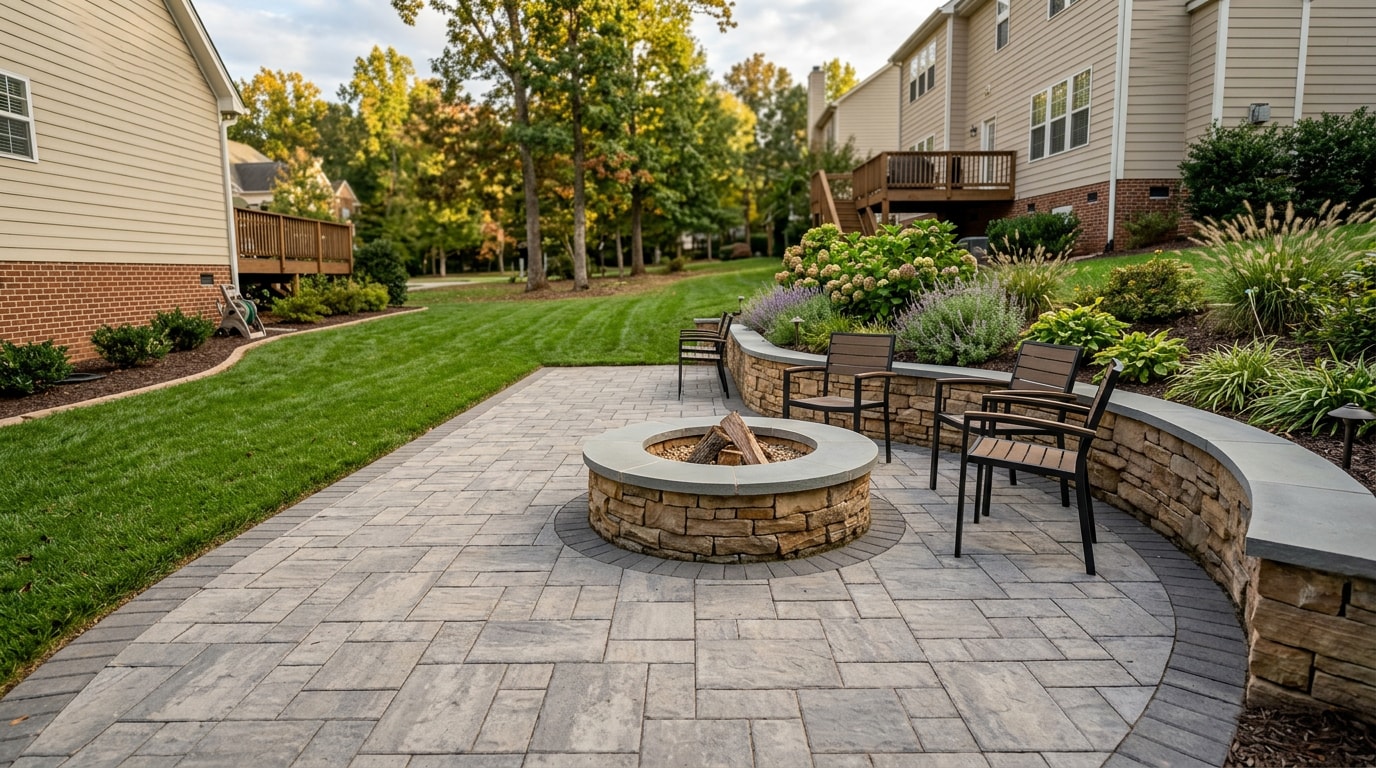
- Patios — paver patio installation or concrete installation, depending on the look and budget
- Walkways — connecting the driveway, porch, and backyard with a surface that won't shift
- Retaining walls — retaining wall construction for sloped lots, tiered beds, and erosion control
- Fire features — fire pit installation as a patio centerpiece
- Outdoor kitchens — outdoor kitchen installation for homeowners ready to cook outside year-round
- Finishing details — stone edging installation and concrete finishing to clean up transitions between surfaces
Every one of these starts with the same walkway installation and patio installation groundwork: proper excavation, base depth matched to the soil, and a grade that moves water away from the house.
What Hardscaping Costs in Fuquay-Varina, NC (2026)
Costs vary with size, material, and how much grading the site needs. These are typical ranges homeowners in the area should budget for, not fixed quotes — a site visit is the only way to get an exact number.
| Project | Typical Range |
|---|---|
| Paver walkway (per linear section) | $1,500 – $4,500 |
| Standard paver patio (200–400 sq. ft.) | $6,500 – $16,000 |
| Retaining wall (per linear foot) | $35 – $75 |
| Fire pit, built-in | $2,500 – $6,000 |
| Full backyard transformation (patio, wall, fire feature) | $25,000 – $75,000+ |
Clay-heavy lots and steep grade changes push jobs toward the top of these ranges because of the deeper base work covered above. Want an exact figure for your yard? Get a free estimate and we'll walk the site before quoting anything.
Our Design-Build Process: From First Visit to Final Walkthrough
A clear process removes the guesswork from a first hardscape project.
- Design consultation. We walk the property, talk through how the space will actually get used, and flag any grading or drainage issues up front, including help from our landscape design team on layout.
- Site preparation. This is where base depth gets set. Our site preparation crews excavate to the depth the soil actually requires, not a generic default.
- Installation. Base, bedding layer, and finished surface go in with compaction checks between each lift.
- Final walkthrough. We go over every detail together to confirm the finished patio, wall, or walkway matches the plan and holds up to a close look.
Permits and Regulations in Fuquay-Varina
Permit rules depend on what's being built, not just its size. The Town's Inspections Department enforces the North Carolina State Building Code within Fuquay-Varina's jurisdiction, including the review and issuance of permits for construction of commercial, single-family, and multi-family buildings and structures . Permits are also issued for accessory structures such as swimming pools, decks, storage buildings, and garages — which is why a pool deck or elevated deck needs a permit even though a ground-level patio often doesn't. By contrast, a permit is not required for the installation of a fence in the town limits, which shows how much permit rules shift based on the structure type.
Because every lot and HOA is different, confirm your specific project with the Town of Fuquay-Varina Inspections Department before breaking ground.
Why Homeowners Choose Paradise Backyards
We've dug enough footings in Fuquay-Varina's clay to know where the standard national specs fall short for this soil, and we build to the deeper, wetter-soil end of that range as the default, not the upgrade. That's the difference between a patio that's still flat in five years and one that needs to be reset.
Fuquay-Varina is one of the Triangle's fastest-growing markets, and neighborhoods like Bentwinds, Mills Park, and South Lakes are full of newer homes ready for paver patios, retaining walls, and fire pit areas. Our team also serves nearby Holly Springs, and you can see examples of finished work on our projects page. Visit our homepage to see our full range of outdoor living work, or go straight to our Fuquay-Varina service area page for local project photos.
FAQ
What is the difference between hardscaping and landscaping?
Hardscaping covers structural, non-living features like patios, walls, and walkways. Landscaping (or softscaping) covers living elements like lawns, trees, and plant beds. Most backyard projects use both together.
How long does a typical hardscape project take?
A standard paver patio usually takes 1–2 weeks. A full backyard transformation with multiple features, patios, walls, and fire pits combined, can take 4–8 weeks from start to finish.
How much does hardscaping cost in Fuquay-Varina?
A basic patio typically starts around $6,500, while a full backyard transformation with a retaining wall, fire feature, and lighting can run $25,000–$75,000 or more, depending on size and site conditions. See the cost table above for a fuller breakdown.
What materials work best for patios in this region?
Premium pavers, natural flagstone, and engineered stone all hold up well against North Carolina's humidity and seasonal swings, provided the base underneath is built for clay. Material choice affects look and price, but base depth affects whether it lasts.
Do I need a permit for a patio in Fuquay-Varina?
Ground-level patios often fall outside the permit requirements that cover accessory structures like pools, decks, and garages, but rules vary by project and HOA. Confirm your specific plans with the Town of Fuquay-Varina Inspections Department before construction starts.
How do I maintain a paver patio once it's installed?
Re-sand the joints every couple of years, keep the surface free of standing water, and reseal every 3–5 years if the pavers were sealed originally. A properly built base means maintenance stays cosmetic instead of structural.
What types of hardscaping services do you offer?
Patios, walkways, retaining walls, fire pits, and outdoor kitchens, each designed and built around how a family actually uses its yard. Contact us for a free estimate on any of these.