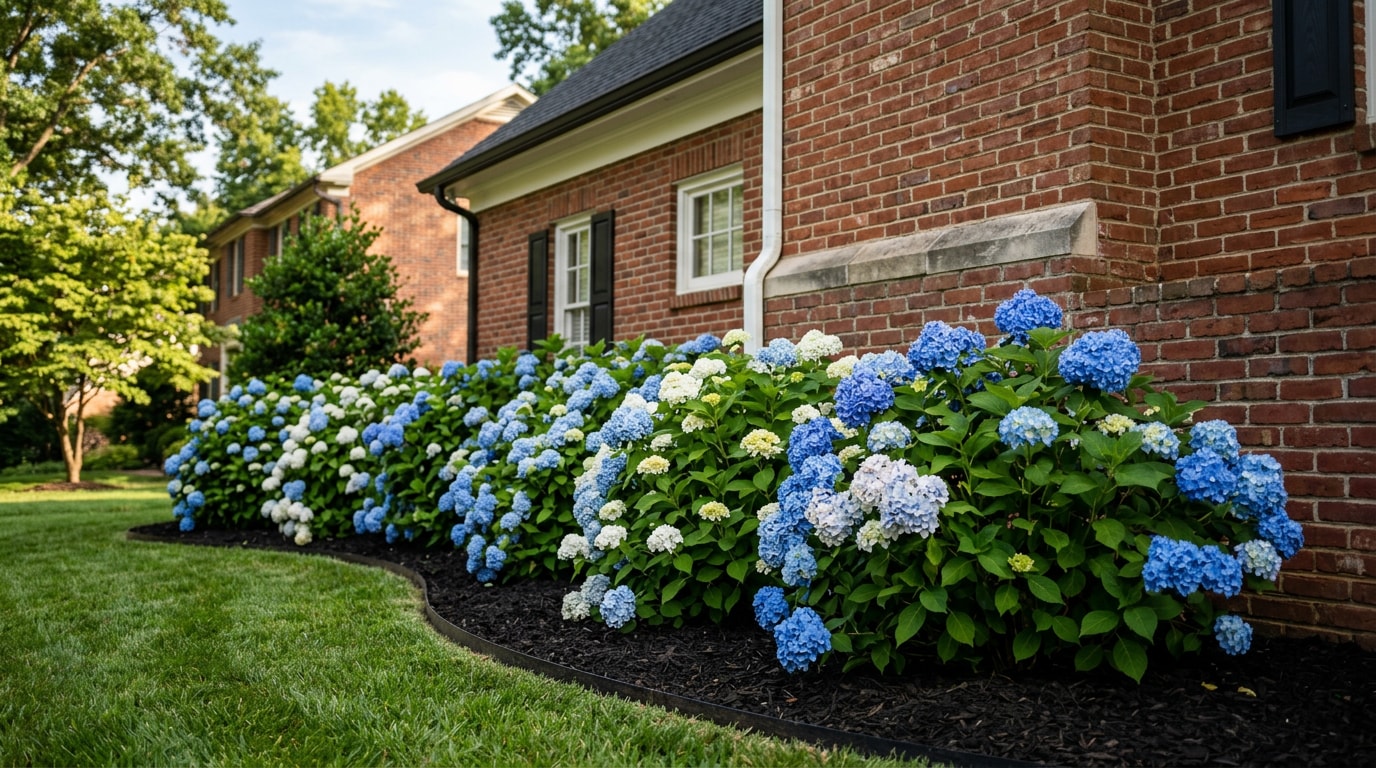
Hydrangea landscaping in Cary, NC comes down to one decision: picking a variety that matches your clay soil, your sun exposure, and the Piedmont's unpredictable spring frosts. Get that match wrong and you'll spend years fighting a plant that refuses to bloom. Get it right, and a single hydrangea bed can anchor a front yard for decades.
Key Takeaways: Hydrangea Landscaping in Cary, NC
- Bloom-wood type decides pruning time. Cut at the wrong time and you remove next year's flowers.
- Late spring freezes are the top reason Piedmont hydrangeas fail to bloom, even when pruning was done correctly.
- Only bigleaf and mountain types change color with soil acidity; panicle and oakleaf varieties stay white or green regardless of pH.
- Cary's official growing zone shifted in 2023, which changes which cultivars actually carry winter-hardiness margin here.
For a broader look at shrub and bed options for your property, visit our Cary, NC service area page, or see the full scope of what we build on our homepage.
Cary's Growing Zone Just Changed: Why That Matters for Hydrangeas
A lot of older plant tags and gardening advice aimed at the Triangle still quote zone 7b. That's outdated.
According to current USDA hardiness data, Cary is now Zone 8a, a change from the 2012 map which placed it in Zone 7b . That one-zone shift sounds small, but it matters for bud-hardy cultivars that were bred and rated under the older, slightly colder baseline.
In practice, this means a bigleaf hydrangea cultivar rated "hardy to zone 6" still has comfortable margin here. But it also means nurseries and online retailers selling plants rated strictly for zone 7 may undersell what Cary yards can actually support. When you're comparing cultivars, check the zone rating against 8a, not the older 7b figure still printed on a lot of tags.
Best Hydrangea Types for Cary, NC Landscapes
Five hydrangea families show up again and again in Cary landscapes, and each one has a different ideal spot in the yard. Picking the right type before worrying about fertilizer or pruning schedule saves years of frustration.
Panicle Hydrangeas
Panicle hydrangeas, including the popular Limelight hydrangea, are the most forgiving choice for full sun Cary gardeners want. They handle direct afternoon heat better than any other type and bloom on new wood, meaning a late freeze rarely wipes out the season's flowers.
Their cone-shaped blooms start creamy white or lime green and often fade to pink by late summer. Because they tolerate full sun and average soil, panicle varieties are usually the lowest-stress option for a new bed.
Bigleaf Hydrangeas
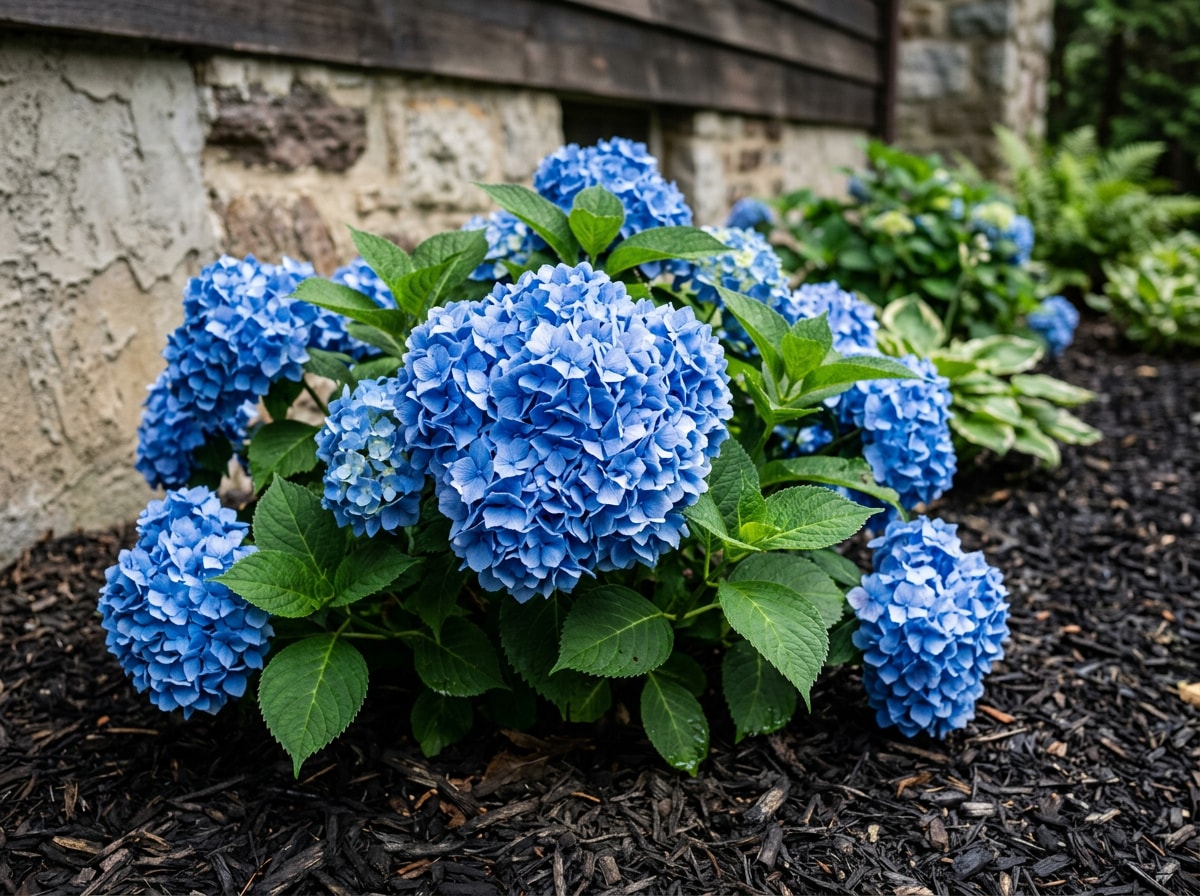
Bigleaf hydrangea, often called mophead hydrangea for its round flower clusters, wants morning sun and afternoon shade rather than all-day exposure. It blooms on old wood, so pruning timing matters far more here than with panicle types.
This is also the variety behind blue-versus-pink soil pH color changes. Our soil needs organic matter, and the natural soil pH for this area runs 4.8 to 5.3, well below the 5.8 to 6.5 range most landscape plants prefer . That natural acidity is exactly what pushes bigleaf blooms toward blue. Adding lime to raise the pH to 6.0 and above shifts the flowers toward pink instead .
Oakleaf and Smooth Hydrangeas
Oakleaf hydrangea grows up to 5 feet high with white flowers and large leaves shaped like oak leaves that turn a beautiful wine red in the fall . It's one of the toughest, most forgiving choices for Piedmont clay and partial shade. Smooth hydrangea, the group that includes Annabelle, tolerates even heavier, wetter clay than most other types and blooms reliably on new growth every summer.
Which Hydrangea Should You Plant? Quick Comparison
The best hydrangea for your Cary yard depends on sun exposure, soil, and how much maintenance you want to take on, not just general zone advice.
| Variety | Sun Needs | Blooms On | Frost Risk to Buds | Color Changes with pH? |
|---|---|---|---|---|
| Panicle (Limelight, Pinky Winky) | Full sun to part shade | New wood | Low | No |
| Bigleaf (mophead, lacecap) | Morning sun, afternoon shade | Old wood | High | Yes |
| Oakleaf | Partial shade | Old wood | Moderate | No |
| Smooth (Annabelle, Incrediball) | Full sun to part shade | New wood | Low | No |
If you want a dependable bloom every single year with minimal fuss, panicle or smooth hydrangea is the safer bet. If color is the priority and you're willing to protect buds during a cold snap, bigleaf is worth the extra attention.
Choosing the Right Spot: Sun, Shade & Site Selection
Where you plant a hydrangea matters as much as which variety you choose. Most hydrangeas sit in that middle ground between full sun and deep shade, and matching the plant to the right light level is what separates a thriving bed from a struggling one.
Partial Shade Plants
Bigleaf, mountain, and smooth hydrangeas all want roughly four to six hours of sun, ideally morning sun with afternoon shade. In a typical Cary lot, that light pattern usually shows up on the north or east side of the house, or under the dappled canopy of mature oaks and pines.
Planting these types where they get blasted by hot afternoon sun often leads to wilting leaves by midday, even when soil moisture is adequate.
Full Shade Plants
Some hydrangeas survive in deep shade, but none truly thrive there. Hydrangeas can be grown in any part of the landscape , and according to the NC State Extension plant database , oakleaf tolerates the deepest shade of the common types, though flowering drops off noticeably compared to a partially sunny spot. Homeowners should expect fewer, smaller flower clusters under heavy tree cover.
Planting and Siting Hydrangeas in the Cary Area
Cary's dense Piedmont clay holds water and compacts easily, which can suffocate hydrangea roots if the planting hole isn't prepared correctly. Dig a hole two to three times wider than the root ball, but no deeper. Rough up the clay walls so roots aren't stuck circling a glazed pit.
Space plants according to their mature spread, since many bigleaf varieties reach four to six feet wide. Water deeply right after planting and maintain even moisture for the first full growing season.
If you'd rather have a professional handle bed prep and placement, our landscape design team works with Cary clay conditions regularly, and our site preparation crews can grade and amend beds before a single shrub goes in the ground. For homeowners planning a full softscape overhaul rather than a single bed, our softscape services guide breaks down what a complete planting project includes.
Pruning Hydrangeas by Variety
Pruning comes back to the same bloom-wood question raised earlier: does this variety set flower buds on old wood from last year, or new wood grown this spring? Get that wrong, and you'll cut off a full season of blooms without realizing why.
Oakleaf Hydrangeas
Pruning oakleaf hydrangea is best done in late winter or very early spring, before new growth emerges. This is also the window to remove any dead or winter-damaged wood. Oakleaf varieties tolerate a light trim well, but heavy pruning should wait until right after bloom in early summer to avoid cutting into next year's buds.
Nikko Blue and Other Bigleaf Hydrangeas
Nikko Blue hydrangea pruning follows old-wood logic: buds form in late summer or early fall for the following year's blooms. Prune immediately after flowering, and avoid pruning after August 1 .
Popular varieties like Penny Mac and Endless Summer follow this same old-wood pattern, though some rebloom slightly on new growth too. When in doubt, prune lightly and only right after the flowers fade.
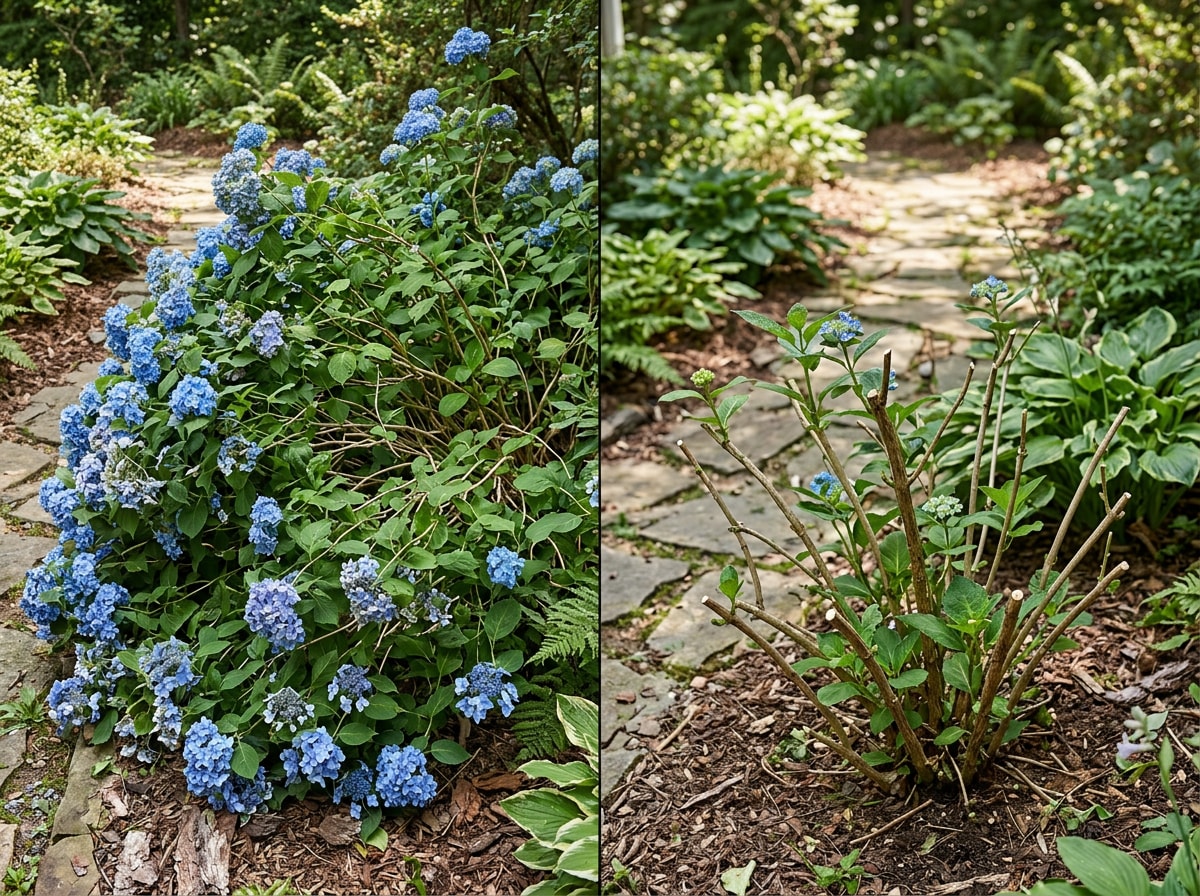
Panicle and Smooth Hydrangeas
Both bloom on new wood, so the pruning window is the opposite of bigleaf and oakleaf types. Cut these back in late winter or very early spring, before new growth emerges. A hard cutback each year on smooth hydrangea actually encourages larger, sturdier blooms the following summer.
Hydrangea Fungus & Disease Problems in Cary's Humid Climate
Cary's combination of summer heat and high humidity creates near-perfect conditions for fungal disease. Powdery mildew shows up as a white, dusty coating on leaves. Leaf spot appears as brown or black spots often ringed with a yellow halo.
Hydrangeas can suffer leaf spot, bacterial wilt, and powdery mildew under some conditions . None of these are usually fatal on their own, but repeated infections weaken the plant and reduce blooming over several seasons. Catching symptoms early makes treatment far more effective.
Effective Treatment Solutions
Start with an organic-first approach: a copper-based fungicide applied at the first sign of spotting or mildew usually stops the spread before it reaches new growth. Reapply according to label instructions, typically every seven to fourteen days during humid stretches.
Beyond fungicide, prevention comes down to plant resilience:
- Thin crowded stems to improve airflow
- Water at the soil line instead of overhead
- Avoid late-season nitrogen fertilizer, which pushes soft new growth that's more vulnerable to infection
Our crews see the same fungal patterns repeat year after year on Cary properties with crowded, overwatered beds. If home treatments aren't keeping up, our landscape contractor team can diagnose and treat persistent shrub issues as part of a broader bed cleanup. Get a Free Estimate and we'll take a look at your beds in person.
FAQ
When Should I Prune Hydrangeas in NC?
Prune old-wood types like bigleaf and oakleaf hydrangea right after they finish blooming, ideally before August 1. Prune new-wood types like panicle and smooth hydrangea in late winter or early spring, before growth resumes. Mixing up the timing is the most common reason Cary hydrangeas stop flowering.
What Is the Best Hydrangea for North Carolina?
Panicle hydrangea is the most reliable bloomer for North Carolina's heat and sun. Oakleaf and smooth hydrangea are the toughest, lowest-maintenance options for clay soil. Bigleaf hydrangea offers classic blue or pink color but carries more frost risk for its old-wood buds.
Do Hydrangeas Like Clay Soil?
Hydrangeas can grow well in clay soil once it's amended with compost or organic matter to improve drainage. Smooth hydrangea, including Annabelle types, tolerates heavier clay better than most. The main fix is loosening compacted soil and avoiding low spots where water pools around the roots.
How Do I Change Hydrangea Color From Pink to Blue?
Lower the soil pH to increase blue tones, and raise it to shift toward pink. This only works on bigleaf and mountain hydrangeas; panicle and oakleaf varieties stay white or green regardless of soil pH. A soil test before adding amendments prevents overcorrecting.
Do Hydrangeas Need Full Sun or Shade in Cary?
Most need a middle ground: four to six hours of sun, ideally morning sun with afternoon shade. Panicle and smooth types tolerate more sun than bigleaf and oakleaf. All-day shade reduces blooming across every type.
When Is the Best Time to Treat Hydrangea Fungus?
Treat hydrangea fungus at the very first sign of spots or mildew, applying fungicide in early morning or late evening to avoid leaf burn. Reapply every one to two weeks until symptoms clear. Homeowners in our Cary, NC service area can also have a professional confirm the diagnosis before treating.