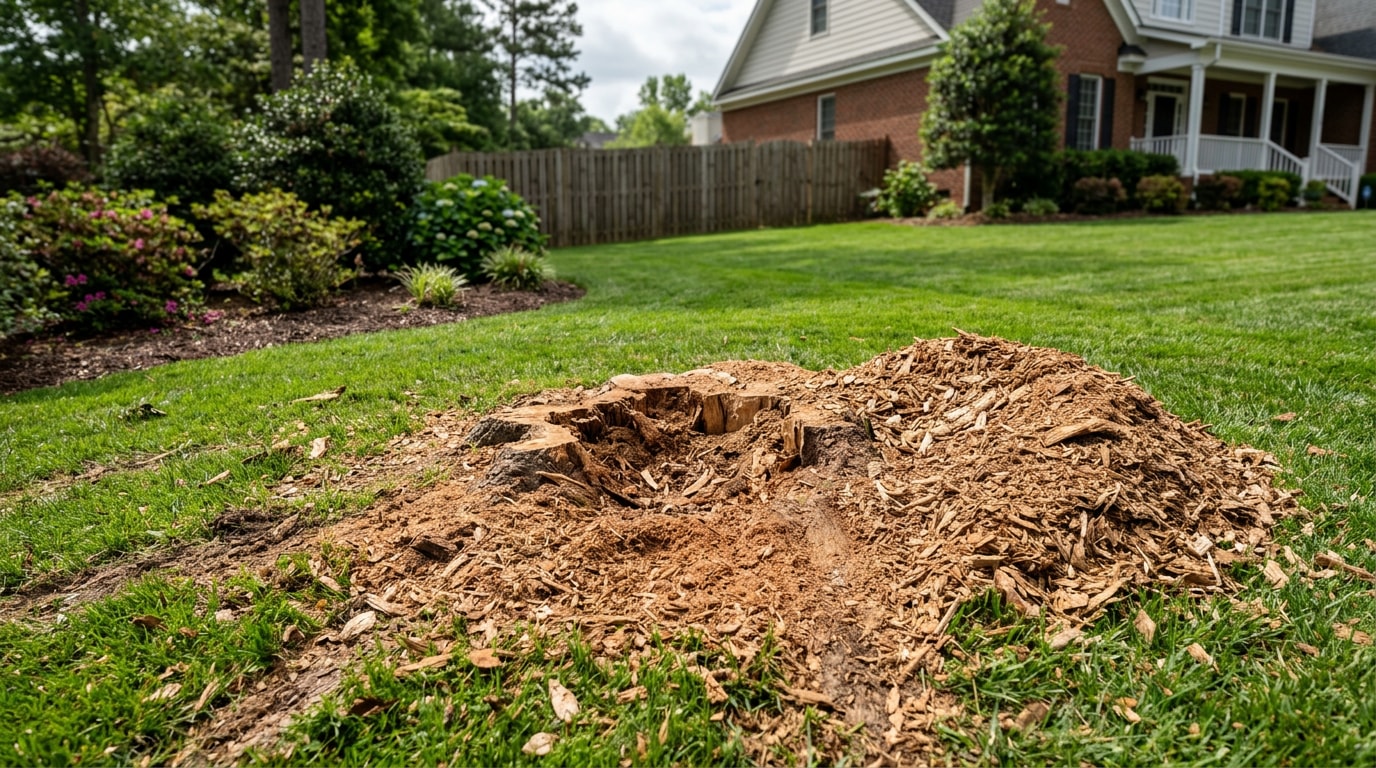
Stump grinding in Wake Forest, NC is the process of mechanically shredding a tree stump and its surface roots down below ground level, so the spot can be mowed, planted, or built on again. It's the step most homeowners skip straight past when planning a new patio or flower bed, then regret later. Here's exactly how it works, what it costs, and why it matters more than it looks like it should.
What Is Stump Grinding, Exactly?
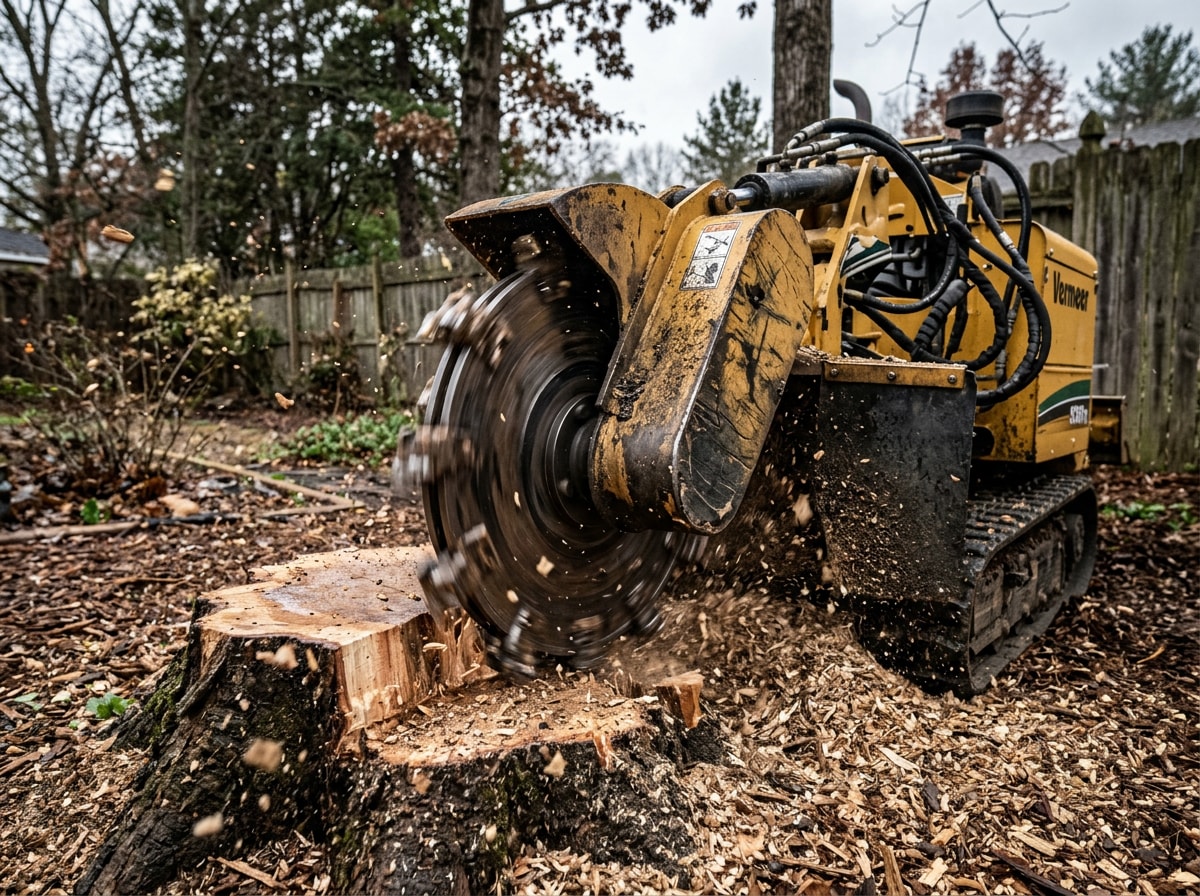
Stump grinding uses a machine called a stump grinder: a rotating cutting wheel lined with carbide teeth that chews a stump into small wood chips. The wheel sweeps back and forth across the stump and its wide surface roots, working downward a few inches at a time until the wood sits below grade.
This is different from full stump removal, which pulls the entire root ball out of the ground with excavation equipment. Grinding is faster and far less disruptive to the surrounding lawn because the deeper root system stays in the ground and breaks down naturally over time instead of being dug out.
Most arborists price the job by measuring the stump at its widest point above the roots, which is also how the Iowa State University Extension's guide to removing tree stumps describes professional grinding: as the quickest, easiest way to clear a stump, with crews typically grinding 8 to 12 inches deep.
Why Wake Forest Homeowners Grind Stumps
A dead stump is rarely just an eyesore. It's usually in the way of something.
- Safety: exposed roots and wood trip up kids, pets, and lawn mowers.
- Pests: decaying wood attracts termites and other insects that can spread toward nearby trees or a home's foundation.
- Landscaping: a stump sitting in the footprint of a planned patio, bed, or fence line has to go before anything else can start.
- Regrowth: grinding destroys the stump's ability to send up new shoots, even though the deeper roots remain.
If you're clearing a yard ahead of a bigger project, stump grinding is usually the first item on the list, not an afterthought. Our site preparation services often start exactly here.
How the Stump Grinding Process Works
Every job follows roughly the same sequence, whether it's one stump or a dozen.
1. Site Visit and Utility Locate
A crew member walks the property to check soil conditions, nearby obstacles, and slope. North Carolina law requires underground utility lines to be marked before any digging or grinding begins. NC811 handles those locate requests for free, but homeowners need to call at least three full working days before work starts, not the morning of.
2. Grinding to Depth
Once the site is clear, the crew grinds the stump and root flare down, typically several inches below ground level, so the area can later be covered with soil, mulch, or sod. Operators wear protective gear and keep the work zone roped off. The Tree Care Industry Association publishes a best-practices guide for operating a stump grinder that covers exactly this kind of hazard control, including staying clear of the danger zone and never leaving the machine running unattended.
3. Cleanup
The leftover wood chips can be hauled away, left on-site as mulch, or used to backfill the hole, depending on what you want. A quick final check confirms the grind depth looks right before the crew leaves.
One thing most stump grinding pages gloss over: those chips are not great fill dirt. The shavings change the soil's texture and nutrient balance right where you want new grass or plants to take root, which is why Iowa State Extension recommends hauling the bulk of the grindings away and bringing in clean topsoil before reseeding. If a bare patch shows up afterward, our guide to reseeding a lawn in Wake Forest walks through getting grass to take in that spot.
Stump Grinding vs. Full Stump Removal
The core difference comes down to whether the root system stays in the ground.
| Factor | Stump Grinding | Full Stump Removal |
|---|---|---|
| Typical time | 1-2 hours per stump | Half a day or more |
| Soil disruption | Minimal | Significant digging and backfill |
| Roots | Left in place to decay naturally | Excavated and hauled off |
| Best for | Lawn restoration, replanting, regrowth prevention | New foundations, driveways, utility trenching |
For most residential yards, grinding is the right call. Full removal only makes sense when you're building something that needs undisturbed soil underneath, like a footing or a utility line.
What Affects Stump Grinding Cost
There's no flat rate because every stump is a different job. The main cost drivers are:
- Diameter of the stump, measured at its widest point
- Number of stumps being ground in the same visit
- Access, since a stump behind a fence or wedged next to a structure takes longer to reach than one in an open yard
- Root flare and hardwood density, which slow down even a well-equipped grinder
A single small stump in an open yard is a quick job. A cluster of large hardwood stumps in a tight side yard is not, and pricing should reflect that gap. The only reliable way to get a real number is a site-specific estimate rather than a national average.
Other Ways People Deal With a Stump (And Why Most Skip Them)
Grinding isn't the only option, just the one that actually finishes the job on a predictable timeline. The University of Illinois Extension's stump removal guide lays out the alternatives:
- Leaving it to decay naturally, which can take years and leaves a hazard in the meantime
- Chemical accelerants, which speed up rot but still require manual cleanup later
- Digging it out by hand, realistic only for small, shallow-rooted stumps
For anything beyond a small sapling stump, grinding wins on time, cost, and how clean the yard looks afterward.
Stump Grinding as Step One, Not the Whole Project
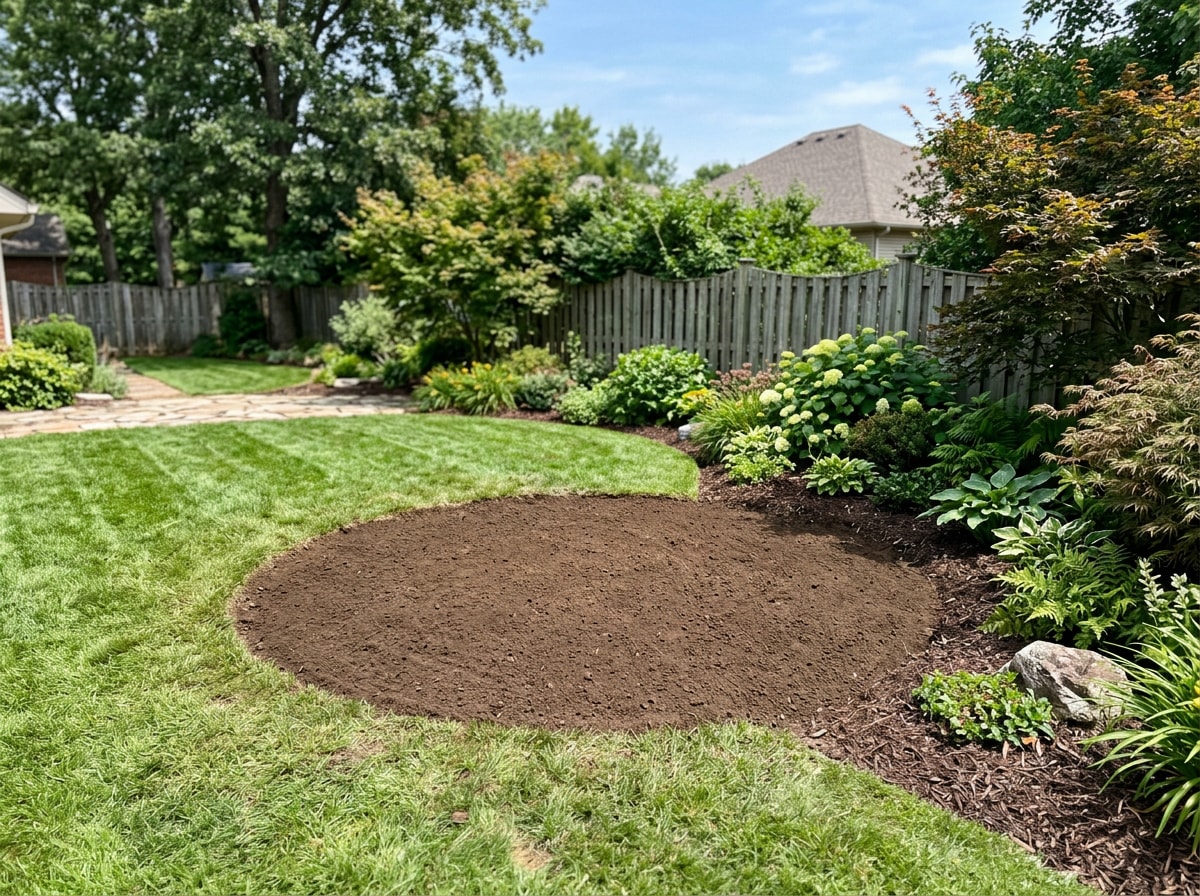
Because Paradise Backyards builds patios, retaining walls, and outdoor living spaces across Wake County, we see stump grinding differently than a tree company does: as groundwork. A stump in the wrong spot doesn't just need to disappear, it needs to disappear in a way that leaves a stable, level surface for whatever comes next, whether that's a paver patio, a new planting bed, or a full landscape design for the yard. That's the lens we bring when a client in Wake Forest calls us about a stump that's really a stand-in for a bigger backyard plan.
Visit our homepage to see the full range of landscape, hardscape, and outdoor living work we handle beyond stump clearing.
FAQ
How long does stump grinding take?
Most single-stump jobs take one to two hours. Larger diameters, multiple stumps, or tight access add time, and a crew can give a firm estimate once they see the site.
Will stump grinding leave a hole in my yard?
Usually not a deep one. Crews typically push the ground wood chips and loose soil back into the cavity. Very large stumps can leave a small mound of extra chips, which gets leveled during cleanup.
Can I plant in the same spot after grinding?
Yes, once the chips are cleared and replaced with clean topsoil. Planting directly into leftover grindings is not recommended, since the wood debris changes the soil's nutrient balance and can stunt new grass or plants.
Is stump grinding safe for my lawn?
Yes. Operators keep the cutting wheel focused on the stump itself, and professional crews follow TCIA safety practices that limit flying debris and protect the surrounding grass.
Do I need to call 811 before stump grinding?
Yes. North Carolina law requires a utility locate before any digging or grinding. Call NC811 at least three full working days ahead; it's free.
Can a stump on a slope or in a tight spot still be ground?
Yes, though it usually costs more and takes longer. Equipment has to be positioned carefully on uneven ground or maneuvered into tight side yards.
What's the real difference between stump grinding and stump removal?
Grinding shreds the visible stump and surface roots, leaving the deeper roots to decay in place. Full removal excavates the entire root ball, which is more disruptive and only necessary for construction-grade site prep.
How do I prepare my yard before the crew arrives?
Clear loose debris, furniture, and decorations near the stump. If you haven't already, schedule your NC811 locate so utility lines are marked before the grinder starts.
Ready to clear the stump and talk through what goes in its place? Get a free estimate from Paradise Backyards and we'll walk the site with you.